
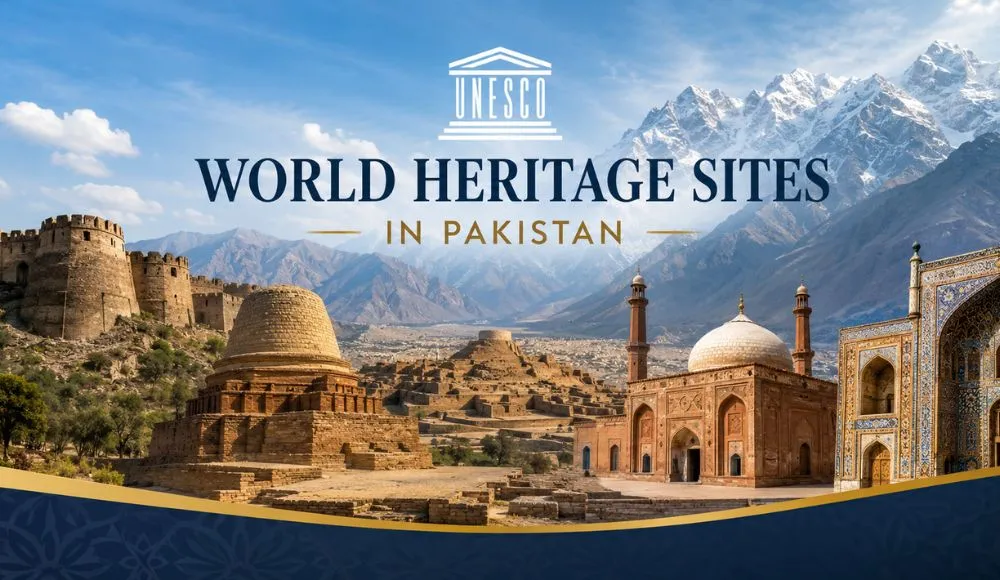
Pakistan’s cultural and historical depth consistently surprises visitors unfamiliar with the country’s extraordinary civilizational heritage. Long before Rome was founded, before Greece entered its golden age, complex urban civilization flourished in what is now Pakistan. The UNESCO World Heritage Sites in Pakistan preserve evidence of this remarkable depth, from 5,000-year-old planned cities to Mughal garden masterpieces that influenced landscape design across the world.
Currently, Pakistan has 6 UNESCO World Heritage Sites on the official World Heritage List, along with numerous additional properties on the Tentative List awaiting evaluation. Each inscribed site represents something genuinely exceptional, not just nationally significant but of “outstanding universal value” by UNESCO’s rigorous standards.
Understanding these sites properly, their historical context, what makes them exceptional, and how to visit them meaningfully transforms encounters from sightseeing into genuine engagement with human civilization’s most remarkable chapters.
UNESCO World Heritage Sites in Pakistan
1. Mohenjo-daro (Sindh)
Inscribed: 1980
Location: Larkana District, Sindh
Period: 2500-1700 BCE
Coordinates: 27.3240° N, 68.1377° E
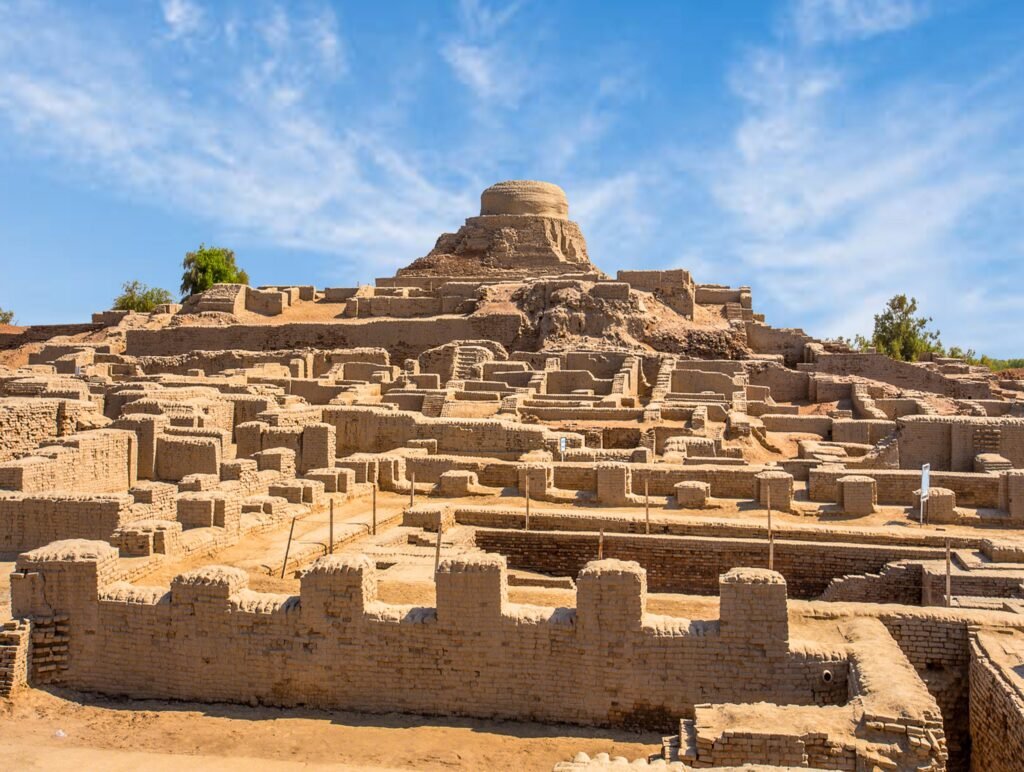
Mohenjo-daro might be the most intellectually extraordinary site in all of South Asia. This 4,500-year-old city, whose name translates from Sindhi as “Mound of the Dead”, represents one of humanity’s earliest and most sophisticated urban experiments, and it remains startlingly advanced for its age.
Around 2500 BCE, Mohenjo-daro was home to about 40,000 people at its busiest time. The city had straight streets laid out in a grid, like a checkerboard. It also had a drain system under the streets that worked better than many cities today.
Builders made multi-storey brick homes using bricks of the same size. Public baths show that people cared about clean living together. Covered sewers ran below the main streets, and the same weights and measures were used across the whole Indus Valley, which means some kind of government likely kept things organized.
What makes it genuinely remarkable: The civic infrastructure? Mohenjo-daro had underground sewage systems in 2500 BCE. The famous Great Bath, a watertight pool built with sophisticated brick technology and featuring changing rooms, suggests ritual bathing practices predating similar traditions in other civilizations. The city’s layout reveals urban planning sophistication that wouldn’t be matched in many parts of the world for millennia.
The mystery: Despite extensive excavation since Charles Masson’s discovery in 1826 and subsequent systematic excavation from 1921, the Indus Valley Civilization’s script remains undeciphered. We don’t know what language these people spoke, what their government was called, what gods they worshipped, or why the civilization declined around 1700 BCE. Mohenjo-daro is thus extraordinary and mysterious simultaneously, a major civilization that spoke to us through material culture while keeping its language, and thus its full story, permanently secret.
Visiting: The site is 28 kilometres south of Larkana in northern Sindh. Best visited from October through March when temperatures are manageable. The on-site museum provides essential context before exploring the ruins. Allow at least 3-4 hours for meaningful exploration. The UNESCO World Heritage listing comes with both recognition and concern; the site faces serious threats from rising groundwater and salt crystallization that damage the ancient brick structures, making conservation an ongoing challenge.
2. Taxila (Punjab/Khyber Pakhtunkhwa)
Inscribed: 1980
Location: Rawalpindi District, Punjab
Period: 600 BCE – 500 CE
Coordinates: 33.7769° N, 72.8348° E
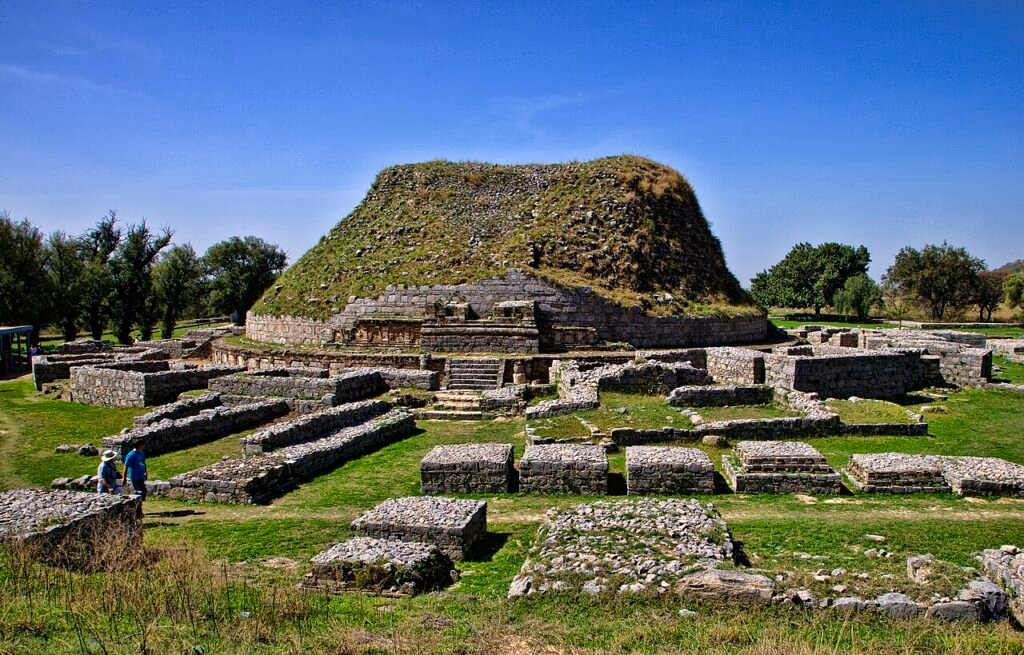
Taxila is arguably the ancient world’s most international city. Over roughly 1,100 years, this extraordinary site at the crossroads of trade routes between South Asia, Central Asia, and the Middle East served as a cosmopolitan center where Greek, Persian, Mauryan, Indo-Greek, Saka, Parthian, Kushan, and finally Hun cultures successively dominated, merged, and transformed each other.
The result is an archaeological landscape of breathtaking complexity. The Taxila valley contains multiple city sites representing different periods: Bhir Mound (the earliest city, 600-200 BCE), Sirkap (the Hellenistic-influenced city, 200 BCE-100 CE), and Sirsukh (the Kushan city, 100-500 CE). Each represents a different civilization’s response to the same geographical advantages.
The Gandhara connection: Taxila was the heart of Gandhara civilization, the remarkable Greco-Buddhist fusion that produced history’s first anthropomorphic Buddha images. Before Gandhara, Buddhism was represented symbolically (empty thrones, footprints, bodhi trees). After Alexander the Great’s campaigns brought Greek artistic traditions to the region, local artists merged Greek sculptural naturalism with Buddhist iconography, creating the classic Buddha figure that spread across Asia. Every Buddha image you’ve ever seen, in Japan, Thailand, China, Sri Lanka, descends from innovations first created in Taxila and surrounding Gandhara.
What to see: The Taxila Museum (one of Pakistan’s finest) should precede site exploration to provide context. Sirkap’s excavated streets and structures are the most visually impressive. The Dharmarajika Stupa is among the subcontinent’s most significant Buddhist monuments. Jaulian Monastery, 2 kilometers from the main complex, contains extraordinary decorated stupas with Buddha images in classical Gandharan style.
Visiting logistics: Taxila is easily accessible from Islamabad (35 kilometers, approximately 45 minutes). Most Islamabad-based visitors make it a day trip. The area is safe, well-serviced for tourists, and can be combined with other nearby heritage sites. Allow a full day for meaningful exploration of multiple sites.
3. Takht-i-Bahi and Sahr-i-Bahlol (Khyber Pakhtunkhwa)
Inscribed: 1980
Location: Mardan District, Khyber Pakhtunkhwa
Period: 1st century BCE – 7th century CE
Coordinates: 34.3228° N, 71.9386° E
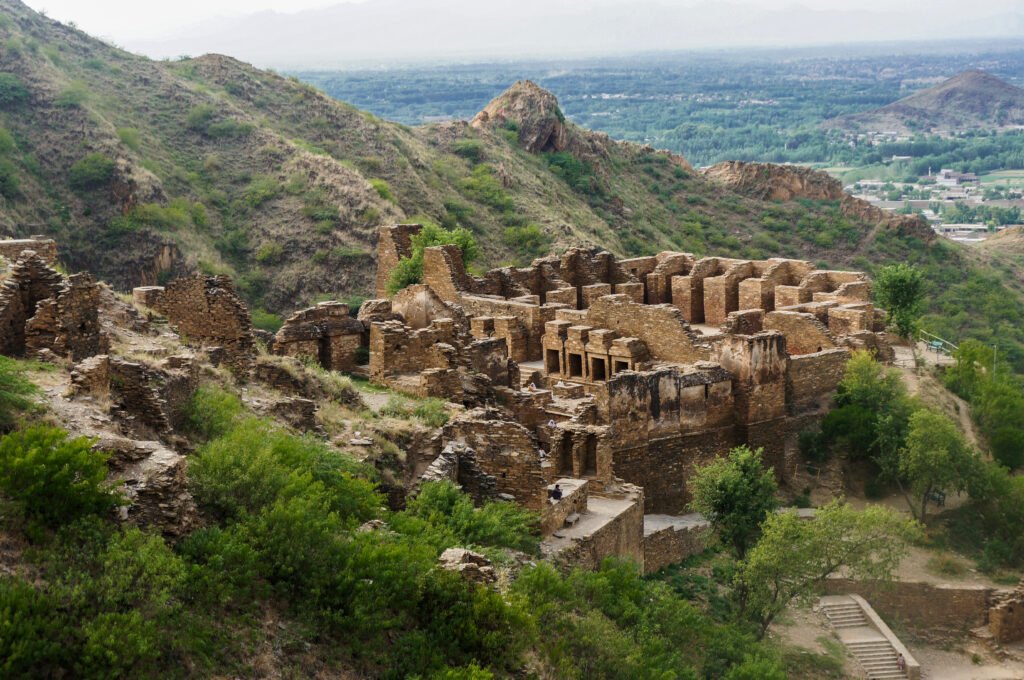
Takht-i-Bahi, meaning “Throne of Origins” in Persian, is the most dramatic of Pakistan’s UNESCO heritage sites, and arguably its most visually impressive. This Buddhist monastic complex, founded in the 1st century BCE and continuously expanded through the 7th century CE, perches on a hilltop 152 meters above the Mardan plain in a position that served both defensive and spiritual purposes.
What makes Takht-i-Bahi exceptional among Pakistan’s heritage sites is its remarkable preservation. While most ancient sites in the region were destroyed, systematically dismantled for building materials, or degraded by agriculture, Takht-i-Bahi survived largely intact because its hilltop location made stone removal impractical. The result is the subcontinent’s best-preserved Buddhist monastery complex, walls standing to considerable height, courtyards intact, meditation cells arranged around stupas, assembly halls, and votive shrines visible in their original spatial relationships.
The site layout: The complex divides into distinct functional zones. The Court of Stupas contains numerous commemorative stupas of different sizes, all originally containing relics or votive offerings. The Monastery Court, surrounded by meditation cells, provided monk residences. The Assembly Hall served communal functions. Open Courtyard complexes served different ritual purposes. This clear spatial organization reveals sophisticated monastic administration that managed hundreds of monks while serving thousands of pilgrims.
Gandharan art connections: Like Taxila, Takht-i-Bahi produced significant Gandharan sculptural art. Pieces removed during excavation now reside in the Peshawar Museum and international collections. Understanding what was created here requires museum visits alongside site exploration.
Sahr-i-Bahlol: The companion site inscribed with Takht-i-Bahi is Sahr-i-Bahlol, a small fortified city 5 kilometers away. Less spectacular than Takht-i-Bahi but archaeologically significant, Sahr-i-Bahlol provides complementary urban settlement context for the same period.
Visiting: Located near Mardan in KPK, approximately 80 kilometers from Peshawar and 130 kilometers from Islamabad. The hilltop climb (20-30 minutes walking) is manageable but requires appropriate footwear. The panoramic views from the complex across the Mardan plain are extraordinary. Best visited October through March; summer heat makes the climb uncomfortable.
4. Lahore Fort and Shalimar Gardens (Punjab)
Inscribed: 1981
Location: Lahore, Punjab
Period: Mughal period, primarily 16th-17th centuries CE
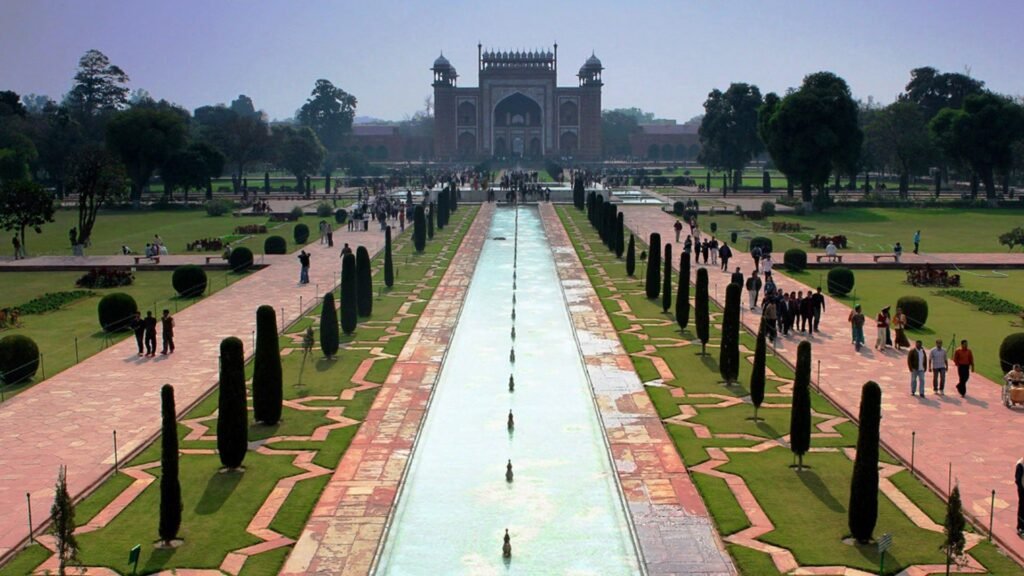
Lahore Fort and Shalimar Gardens were inscribed together as a single UNESCO World Heritage property representing the Mughal Empire’s architectural and cultural achievements at their zenith. Together they showcase two dimensions of Mughal civilization, martial power and palatial complexity (Lahore Fort) alongside sophisticated pleasure culture and landscape mastery (Shalimar Gardens).
Lahore Fort (Shahi Qila):
The Lahore Fort, known locally as Shahi Qila, occupies 20 hectares in Lahore’s old city and contains structures spanning multiple Mughal emperors’ reigns. The fort wasn’t built by a single emperor but accumulated significance across generations, with each ruler adding, modifying, or embellishing according to their particular aesthetic and political vision.
The Sheesh Mahal (Palace of Mirrors) represents Mughal decorative arts at their most extraordinary, the interior covered with thousands of small convex mirrors arranged in geometric patterns that reflect candlelight into infinite repetition, creating a literally dazzling interior experience that demonstrates technical sophistication alongside aesthetic ambition.
The Diwan-i-Aam (Hall of Public Audience) and Diwan-i-Khas (Hall of Private Audience) represent the Mughal administrative system’s physical expression, spaces where power was performed, petitions heard, and imperial presence made tangible for subjects.
The Alamgiri Gate, facing the Badshahi Mosque across the iconic Hazuri Bagh garden, creates one of the subcontinent’s most powerful architectural compositions. The way the fort gate lines up with the mosque was planned to look powerful. It shows how the Mughals used buildings to show off both political power and religious authority at the same time.
Shalimar Gardens:
Shah Jahan, the emperor also responsible for the Taj Mahal, commissioned Shalimar Gardens in 1641 as a pleasure garden representing the Mughal ideal of paradise made physical on earth. The Persian word bagh (garden) contained theological meaning; the Quran describes paradise as a garden, and Mughal emperors deliberately created gardens that made this divine promise visible in the material world.
The garden’s three terraced levels, descending from the highest royal terrace to the more public lower levels, established hierarchy while creating the water cascade effects that were Mughal garden engineering’s most technically demanding achievement. Water was brought from the Ravi River through specially constructed canals, a significant engineering undertaking justified by the aesthetic and symbolic result.
At its peak, 410 fountains operated simultaneously across the terraced garden. The current restoration has recovered some of this original character, though the full magnificence of the Mughal original requires imagination to reconstruct.
UNESCO concerns: Both sites are on the UNESCO List of World Heritage in Danger due to development pressure, inadequate management, and deterioration of original fabric. Visiting now supports awareness of preservation challenges while experiencing extraordinary heritage.
Visiting Lahore Fort: Located in the old city adjacent to Badshahi Mosque, combine both in a single day’s exploration. The fort charges modest entry fees for Pakistani and international visitors. Allow 3-4 hours minimum. The Lahore Museum nearby provides excellent Mughal-period context.
5. Rohtas Fort (Punjab)
Inscribed: 1997
Location: Jhelum District, Punjab
Period: 16th century CE (begun 1541)
Coordinates: 32.9667° N, 73.5833° E
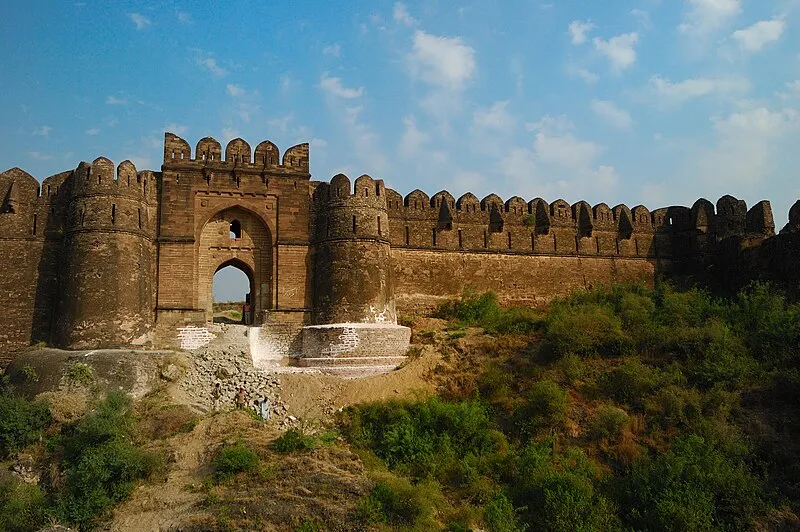
Rohtas Fort represents a fascinating historical moment, Afghan emperor Sher Shah Suri’s determination to permanently prevent the Mughal Empire’s return to India after defeating and exiling Emperor Humayun in 1540. The fort was never intended as a permanent settlement but as a strategic military installation controlling the route between Kabul and Delhi, ensuring that if Humayun ever returned from Persia with an army, he would face an obstacle of overwhelming power.
The historical irony is complete: the fort was unfinished when Humayun returned in 1555, reclaimed Delhi, and Sher Shah Suri’s brief Sur Empire collapsed. Rohtas Fort never fulfilled its defensive purpose, never resisted a serious siege, and stands today as one of South Asia’s finest examples of military architecture created for a strategic purpose that history rendered obsolete before completion.
What makes Rohtas exceptional architecturally: The scale and sophistication of its defensive engineering demonstrate 16th-century South Asian military architecture at its most ambitious. The Sohail Gate, its most celebrated entrance, represents Indo-Islamic architecture of remarkable sophistication with elaborate stone carving that more closely resembles palace decoration than military construction. This combination of formidable defensive engineering with artistic embellishment characterizes the fort’s paradoxical nature.
The walls extend approximately 4 kilometers in circumference with 68 bastions and 12 gates, enclosing an area sufficient to shelter an entire army with livestock. The walls’ thickness (15-18 feet in places) and height reflect contemporary understanding of artillery warfare’s demands.
Visiting: Located 40 kilometers west of Jhelum and 100 kilometers from Rawalpindi/Islamabad. Less visited than Lahore Fort, Rohtas rewards visitors with a more intimate, less crowded exploration experience. The surrounding landscape, rolling hills of the Potohar Plateau, provides attractive context. Allow at least 2-3 hours for meaningful exploration. The nearby town of Rohtas village houses a small local community within the fort walls, a living heritage context that makes this site distinctive among Pakistan’s UNESCO world heritage forts.
6. Fort and Shalamar Gardens: UNESCO World Heritage Fort in Pakistan
While covered above under their individual descriptions, it’s worth clarifying for readers searching specifically for the UNESCO world heritage fort in Pakistan: both Lahore Fort and Rohtas Fort carry UNESCO inscription. Lahore Fort and Shalimar Gardens are inscribed together as a single property; Rohtas Fort is inscribed separately.
Also Read: Discover Pakistan: 19 Interesting Facts That Will Surprise You
UNESCO Tentative Sites Worth Visiting
Pakistan’s Tentative List contains numerous additional properties submitted for eventual UNESCO evaluation. These sites haven’t yet received full World Heritage inscription but are considered by Pakistan’s government to have potential “outstanding universal value.” Many are extraordinary destinations that deserve visitor attention regardless of their formal UNESCO status.
Makli Necropolis (Sindh)
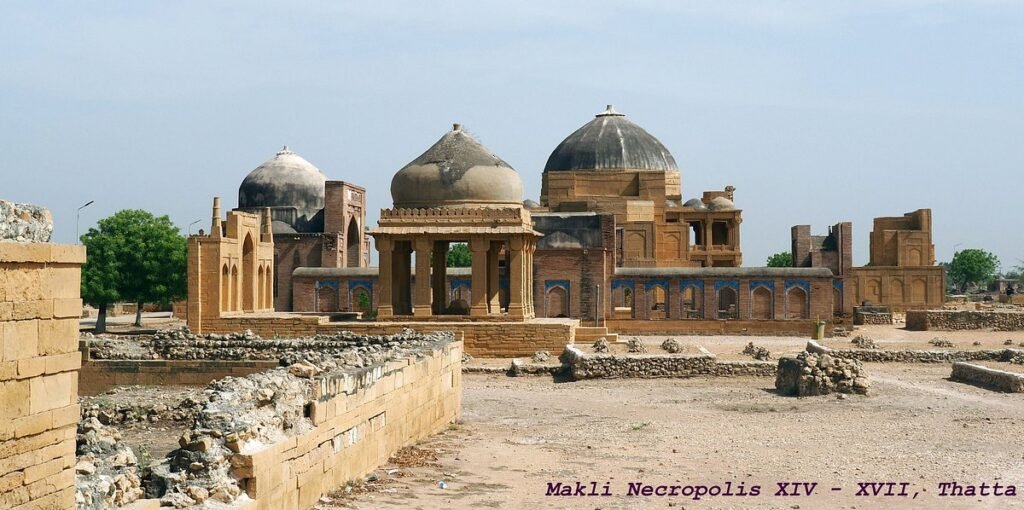
Located near Thatta in Sindh, Makli is one of the world’s largest funerary complexes, approximately 125,000 tombs spread across 10 square kilometers, representing four dynasties of rulers from the 14th through 18th centuries. The architectural diversity is extraordinary: tombs ranging from simple carved sandstone markers to elaborate multi-story mausoleums reflecting Hindu, Islamic, and Central Asian architectural influences in fusion combinations impossible to find elsewhere.
Makli is a UNESCO Tentative List site but is already inscribed as a separate UNESCO site in its own right, it was inscribed in 1981. Often overlooked in Pakistani heritage sites discussions, it deserves far more recognition.
Ranikot Fort (Sindh)
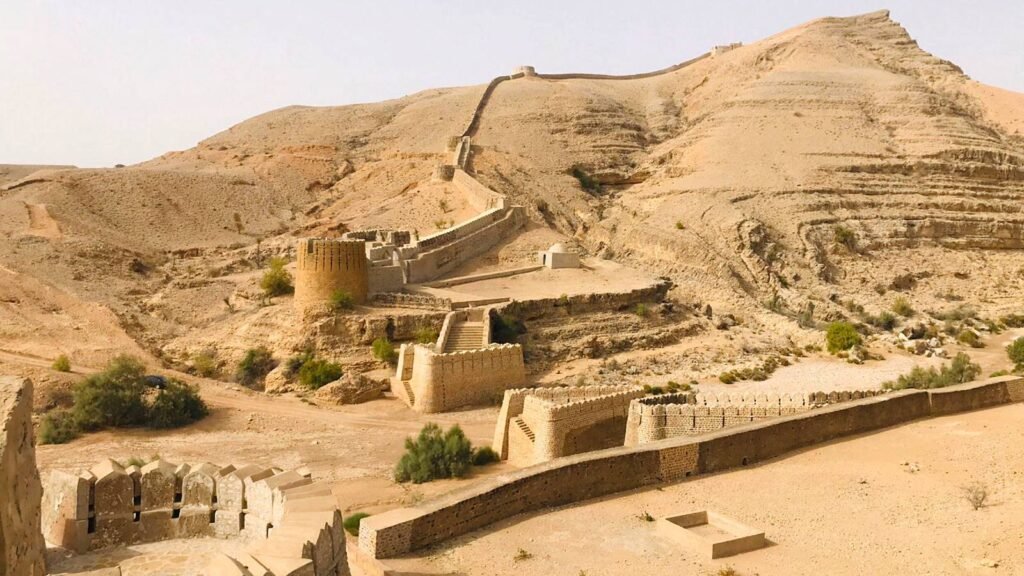
The world’s largest fort by circumference, with approximately 32 kilometres of walls winding through the Kirthar Range’s rugged terrain, Ranikot fort remains mysterious in both origin and purpose. Its builders and their intentions remain subjects of genuine historical debate. The scale alone makes it extraordinary; the theories about its construction make it intellectually fascinating.
Baltit Fort (Gilgit-Baltistan)
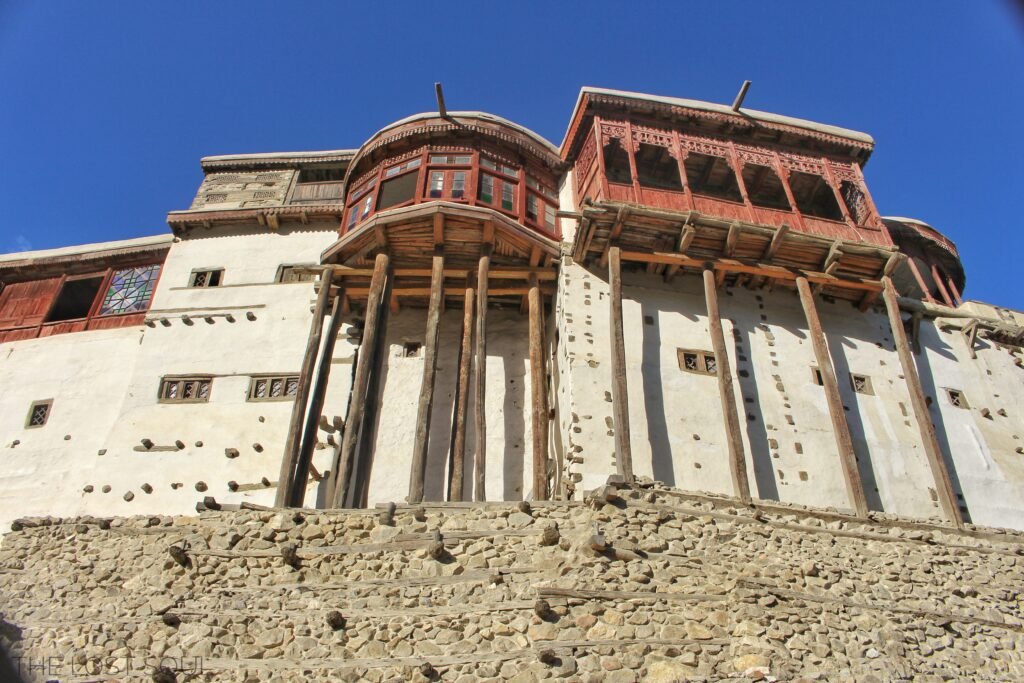
The ancient seat of the Mirs of Hunza, Baltit Fort perches dramatically above Karimabad, with Ultar Sar rising directly behind. The fort’s Tibetan-influenced architecture, recent comprehensive restoration by the Aga Khan Trust for Culture, and extraordinary mountain setting make it one of northern Pakistan’s most impressive heritage landmarks, well worth visiting regardless of UNESCO inscription status.
Altit Fort (Gilgit-Baltistan)
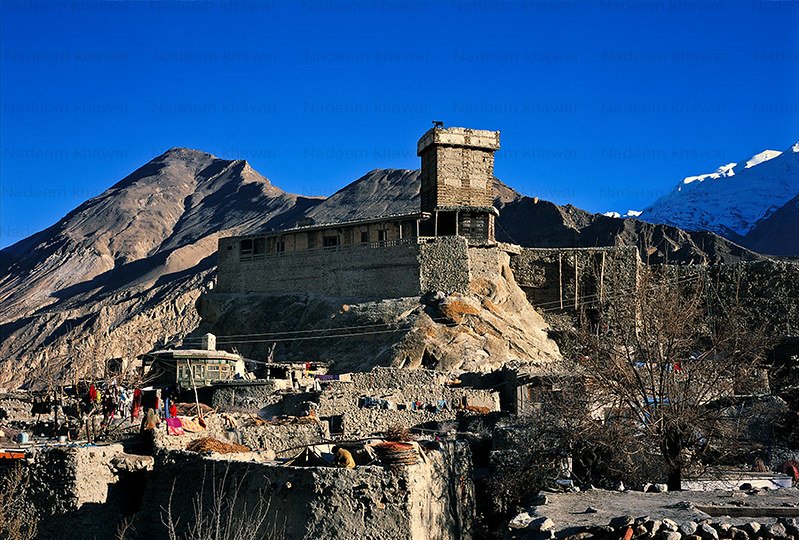
Older than Baltit and equally dramatically positioned, Altit Fort represents Hunza’s earliest known architectural heritage. The fort’s recent restoration has revealed extraordinary decorative woodwork and structural details that establish it as a major architectural achievement of high-altitude mountain culture.
Deosai National Park (Gilgit-Baltistan)
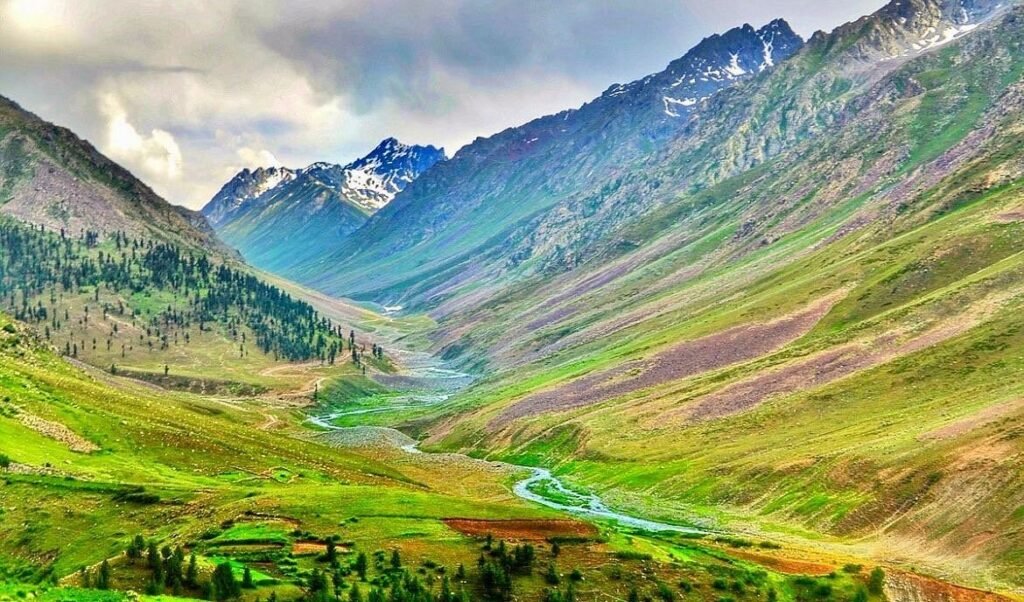
One of the world’s highest plateaus at approximately 4,114 meters, Deosai hosts remarkable biodiversity including the endangered Himalayan Brown Bear, a conservation success story in progress. The plateau’s extraordinary wildflower displays in July-August and its position as one of Asia’s highest accessible ecosystems make it ecologically significant beyond its considerable scenic beauty.
Hingol National Park (Balochistan)
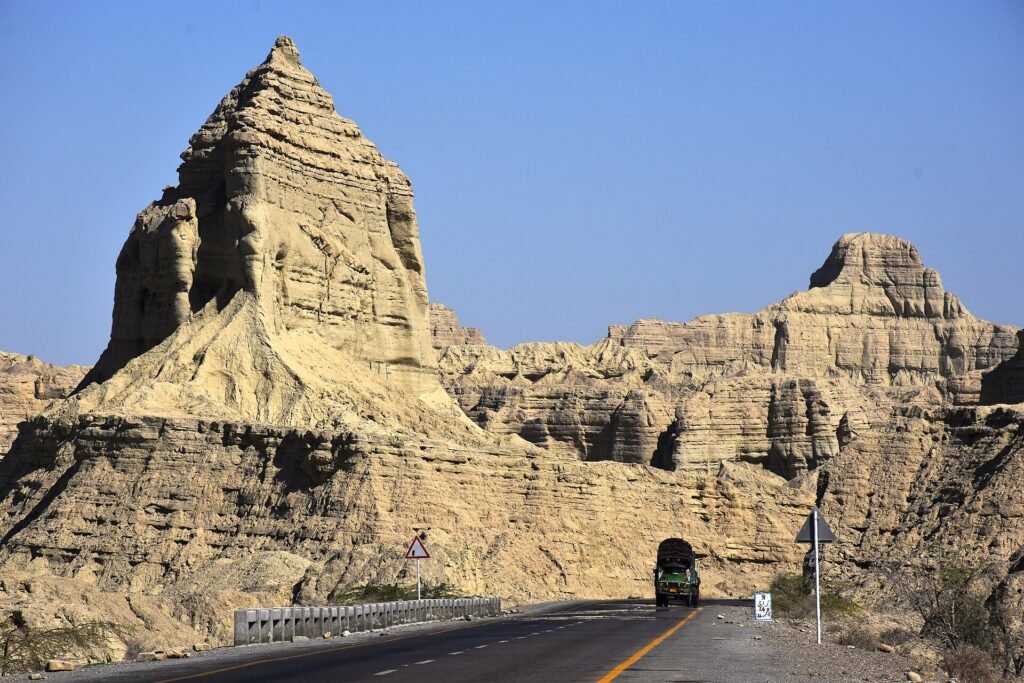
Pakistan’s largest national park encompasses extraordinary geological features, the Makran Coastal Highway’s most dramatic section, Pakistan’s most photogenic beaches, and desert-coastal ecosystem diversity found nowhere else in the country. The Princess of Hope rock formation, Sphinx-like natural monuments, and Kund Malir beach’s turquoise waters make Hingol a natural heritage site of genuine exceptional value.
Derawar Fort (Punjab)
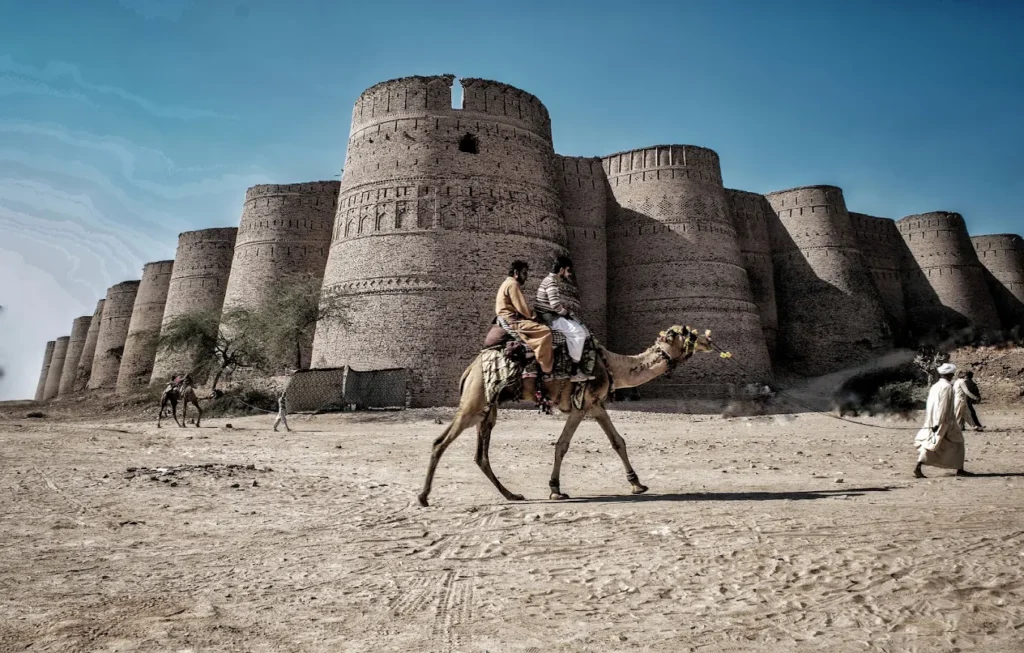
Rising dramatically from the Cholistan Desert, Derawar Fort‘s massive circular bastions visible from kilometers across flat desert create one of Pakistan’s most iconic silhouettes. The fort’s near-perfect preservation and the Abbasi dynasty’s royal mosque adjacent to it create a remarkable desert heritage complex.
Katas Raj Temples (Punjab)
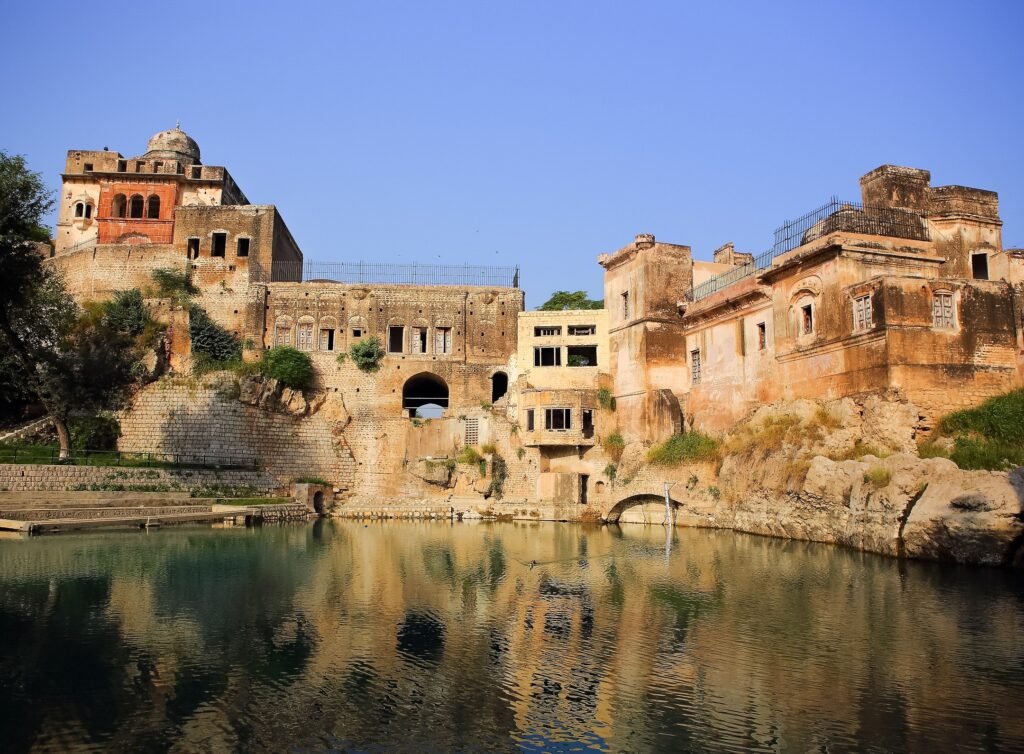
A sacred lake mentioned in the Mahabharata, formed, according to Hindu legend, from the tears of Lord Shiva, surrounded by temples spanning multiple periods and religious traditions makes Katas Raj remarkable for both religious significance and architectural diversity. The sacred lake’s turquoise color against ancient temple architecture creates visuals matching international heritage destinations.
Central Karakoram National Park (Gilgit-Baltistan)
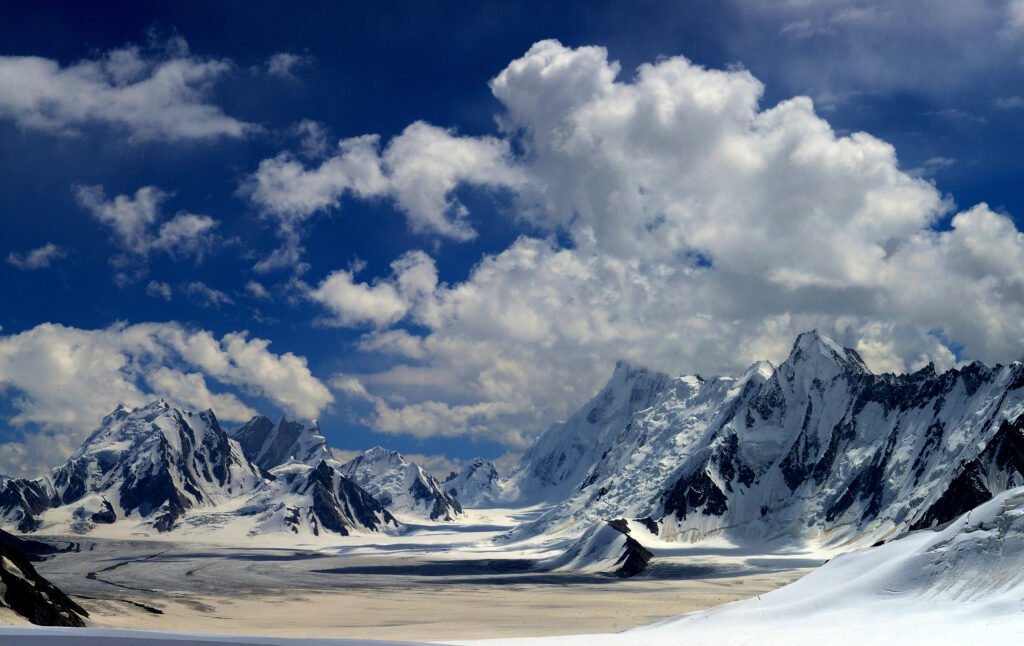
Containing K2, the world’s second-highest peak, and the greatest concentration of high mountains on earth outside the Himalayas, Central Karakoram National Park represents a natural heritage of genuinely planetary significance. The park contains 60% of Pakistan’s glacier coverage and serves as water tower for vast areas of downstream agriculture.
Nagarparkar Cultural Landscape (Sindh)
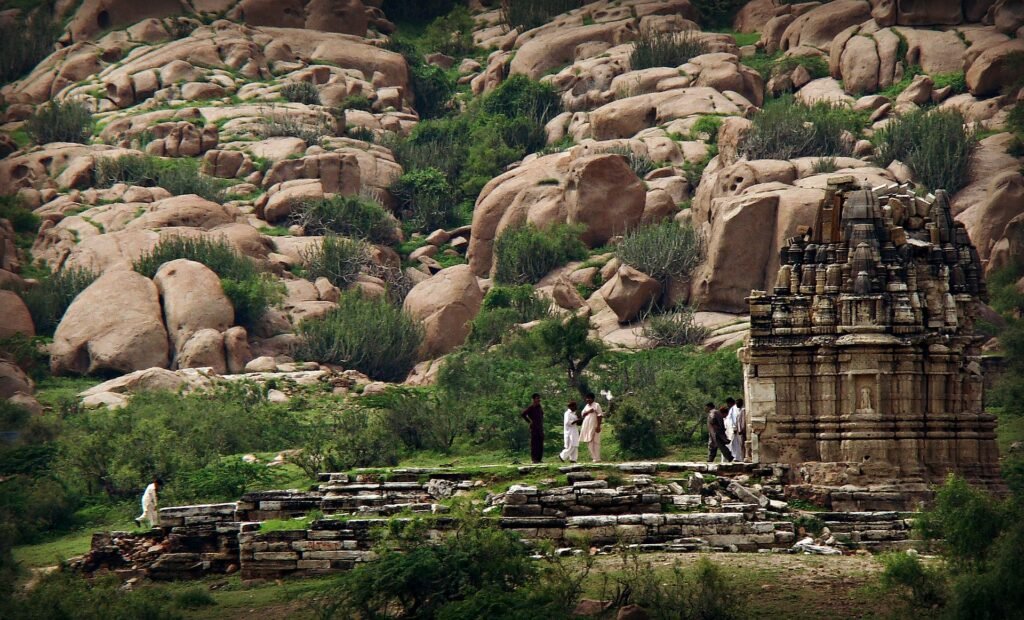
The Nagarparkar area near Pakistan’s border with India contains an extraordinary concentration of medieval Jain temples and the distinctive Thar Desert landscape. These temples, built when this route was part of active pilgrimage circuits, represent Jain architectural traditions rarely preserved in Pakistan.
Also Read: Top 20 Coldest Places in Pakistan
Experience Pakistan’s UNESCO Heritage with Eventica Travels
Visiting Pakistan’s extraordinary heritage sites requires expert planning that combines historical knowledge with logistical expertise. Eventica Travels creates comprehensive UNESCO heritage tours that provide proper historical context, comfortable logistics, and the kind of informed interpretation that transforms site visits from observation into genuine understanding.
Our heritage tour guides aren’t simply route-followers; they’re knowledgeable companions who understand the historical significance of what you’re seeing and communicate it in ways that make ancient civilizations feel immediate and relevant.
Featured Heritage Tour Packages
🏛️10 Days Group Tour Hunza & Minimerg
Hunza Valley, Attabad Lake, Passu Cones, Altit/ Baltit Fort, Royal Garden, Khunjerab Pass, Khanpur Lake
Sindh Heritage Discovery
02 Days Group Tour Gorakh Hills Station
Balochistan Coastal Adventure
02 Days Group Tour Ormara Beach, Balochistan
Eventica Travels – Connecting Travelers to Pakistan’s Extraordinary Civilizational Heritage
“Every great civilization leaves evidence. Pakistan’s evidence spans 5,000 years. Let us show you all of it.”


