
There are mountain views, and then there are the Passu Cones. The moment you round a bend on the Karakoram Highway and these jagged cathedral spires erupt from the earth above Passu village, something shifts in your perception of what mountains can look like. These aren’t rounded peaks or broad summits, they’re angular, almost architectural rock formations that rise so abruptly from the valley floor that they seem impossible, like something a set designer might create for a fantasy film rather than what geology actually produces.
Passu Cones Pakistan has become one of the country’s most photographed mountain formations precisely because no photograph fully captures what standing beneath them feels like. The scale, the sharpness, the way they dominate the sky above Passu village, these qualities require physical presence to genuinely understand. This comprehensive Passu Cones travel guide covers everything you need to experience these extraordinary peaks at their finest.
What Are the Passu Cones?
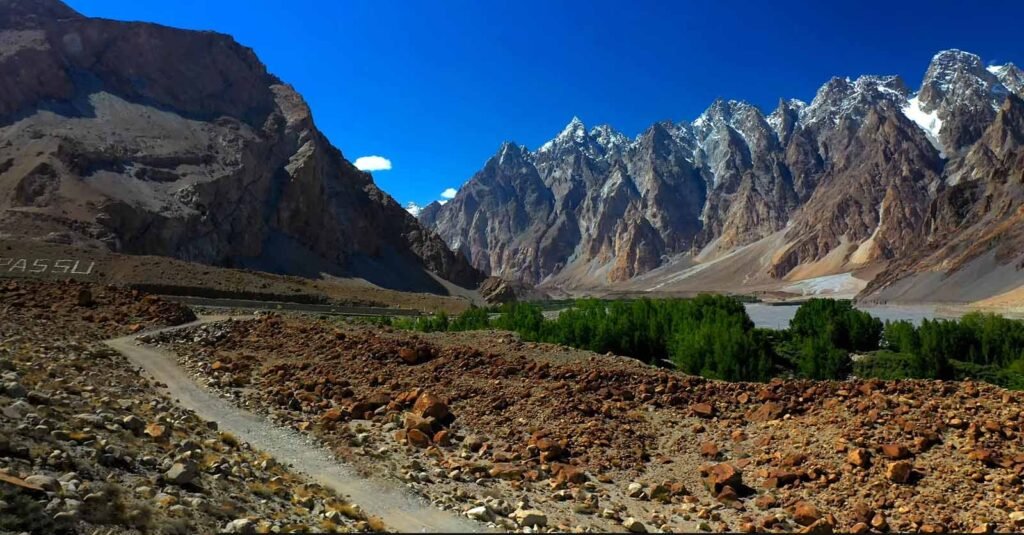
Passu Cones, also called Passu Cathedral or Passu Peaks in various travel contexts, refer to a dramatic cluster of pointed rock formations rising above Passu village in upper Hunza. The most distinctive peaks in this cluster include Passu Sar (7,478 meters), Passu Cathedral (6,239 meters), Shispare (7,611 meters), and Yukshin Gardan Sar (7,530 meters), though it’s the lower, sharper Cathedral spires visible from the highway that create the formation’s distinctive silhouette.
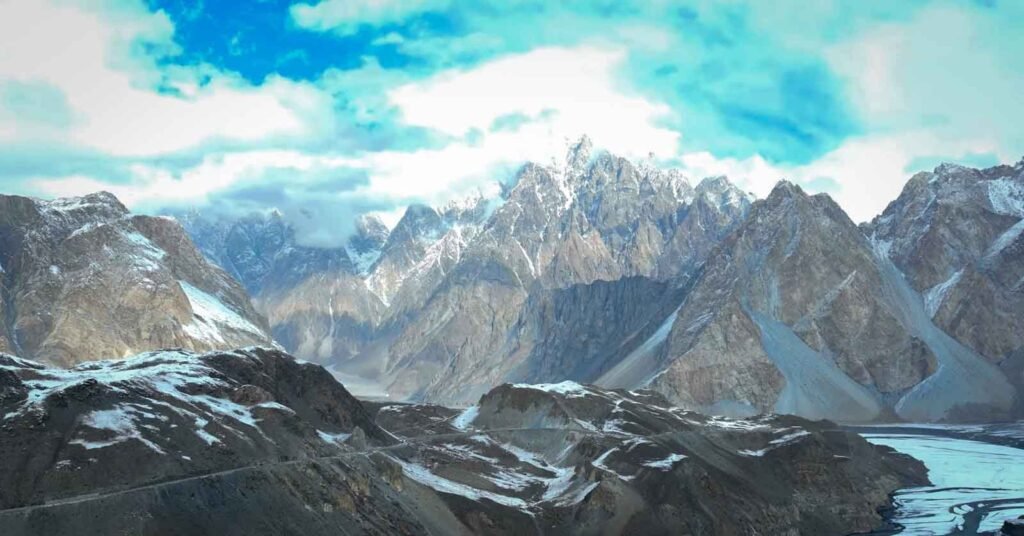
The geological explanation for the Passu Cones’ distinctive character involves the particular way glacial erosion and freeze-thaw weathering has affected the granite and metamorphic rock in this section of the Karakoram. While most high mountains develop rounded or broadly pyramidal profiles as weathering attacks from multiple directions, the Passu formations have been sculpted by directional glacial action into their remarkable angular, tooth-like profiles. The result is geological sculpture of extraordinary visual power.
The name “Cones” is somewhat misleading; these aren’t smooth conical shapes but jagged, irregular spires with vertical and near-vertical faces that challenge even experienced technical climbers. The popular designation sticks, however, because the overall impression from a distance is of multiple pointed forms emerging from a single dramatic massif.
Where Are the Passu Cones Located?
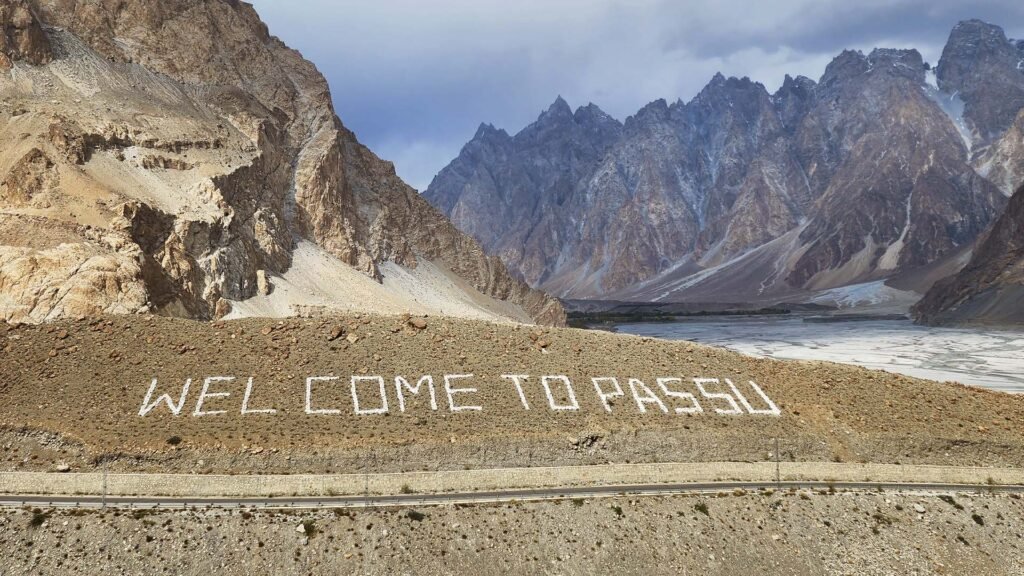
Passu Cones location is in the Gojal region of upper Hunza, Gilgit-Baltistan province, Pakistan. The peaks rise directly above Passu village, which sits at approximately 2,400 meters elevation on the Karakoram Highway, approximately 15 kilometers north of Gulmit and about 110 kilometers from Karimabad (Hunza’s main tourist hub).
Geographic context:
- The peaks form part of the western wall of the Batura Glacier system, one of the longest glaciers outside the polar regions
- They sit on the western side of the Karakoram Highway, visible from the road for several kilometers on approach
- The Afghan border lies approximately 60 kilometers to the north
- China’s Xinjiang province is approximately 50 kilometers northeast
Passu Cones distance from Karimabad: Approximately 110-120 kilometers (2-2.5 hours’ drive north along the Karakoram Highway).
Distance from Gilgit: Approximately 150 kilometers (2.5-3 hours).
Distance from Islamabad: Approximately 700 kilometers (12-14 hours by road, or fly to Gilgit then drive).
The Passu Cones Hunza connection is both geographic and touristic, most visitors approach via Karimabad as their Hunza base before driving north to Passu on a day trip or overnight excursion.
Why Are the Passu Cones Famous?
The Passu Cones have become one of Pakistan’s most recognizable mountain images for several interconnected reasons that go beyond simply being impressive mountains:
The silhouette: The particular angular, spire-like profile of the Passu Cathedral formations is distinctive in a way that most mountain massifs aren’t. Where many high mountains have profiles that blend into each other, the Passu Cones maintain sharp individual identities even at significant distance.
Highway accessibility: Unlike most extraordinary mountain views that require days of trekking, the Passu Cones are visible directly from the Karakoram Highway and from Passu village itself. This accessibility doesn’t diminish the view, it makes it available to travelers of all physical capabilities.
The Hussaini Suspension Bridge connection: The famous Hussaini Suspension Bridge, located just upstream from Passu village, has brought international attention to this area. The combination of the bridge’s thrilling crossing experience with the backdrop of the Passu Cones creates a location that delivers two extraordinary experiences simultaneously.
Photography: The combination of accessible viewpoints, multiple angles, changing light conditions across different times of day, and the formations’ inherently photogenic character has made Passu Cones a pilgrimage destination for landscape photographers from around the world.
Batura Glacier proximity: The Batura Glacier, one of the world’s longest glaciers outside the polar regions, flows from the same massif as the Passu Cones, adding glaciological significance to the visual drama.
How to Reach Passu Cones
From Karimabad (Hunza)
The most common approach for tourists based in central Hunza:
Distance: 110-120 kilometers
Time: 2-2.5 hours
Route: Karimabad → Karakoram Highway (northbound) → Gulmit → Passu village
The Karakoram Highway north of Gulmit provides increasingly dramatic views as you approach Passu, with the Cones becoming visible from several kilometers away. The road quality is generally good, though mountain roads always require careful driving.
Transport options from Karimabad:
- Hired car or jeep: Most convenient, PKR 5,000-8,000 for day trip
- Public van (Coaster): Shared vans run between Karimabad and Sost, passing through Passu (PKR 200-400 per person)
- Tour operator transport: Included in comprehensive Hunza packages
From Gilgit
Distance: Approximately 150 kilometers
Time: 2.5-3 hours
Route: Gilgit → Karakoram Highway northbound → Hunza Valley → Gulmit → Passu
From Islamabad
Fastest option: Fly Islamabad to Gilgit (PIA, 45 minutes, weather-dependent) then drive to Passu (2.5-3 hours). Total: approximately 4-5 hours when flights operate.
Most reliable option: Drive the full Karakoram Highway from Islamabad, spectacular but demanding, approximately 14-16 hours driving time. Most visitors break this into 2-day journey, overnighting in Chilas or Gilgit.
Vehicle Requirements
The Karakoram Highway to Passu is accessible by regular cars in good conditions. The surface is paved throughout this section. However, for exploring beyond Passu village, crossing toward Batura Glacier or accessing higher viewpoints, 4×4 capability is beneficial. The highway itself doesn’t require 4×4.
Best Time to Visit Passu Cones
Understanding the best time to visit Passu Cones ensures you experience the formations in optimal conditions:
Spring (April-June) – Outstanding
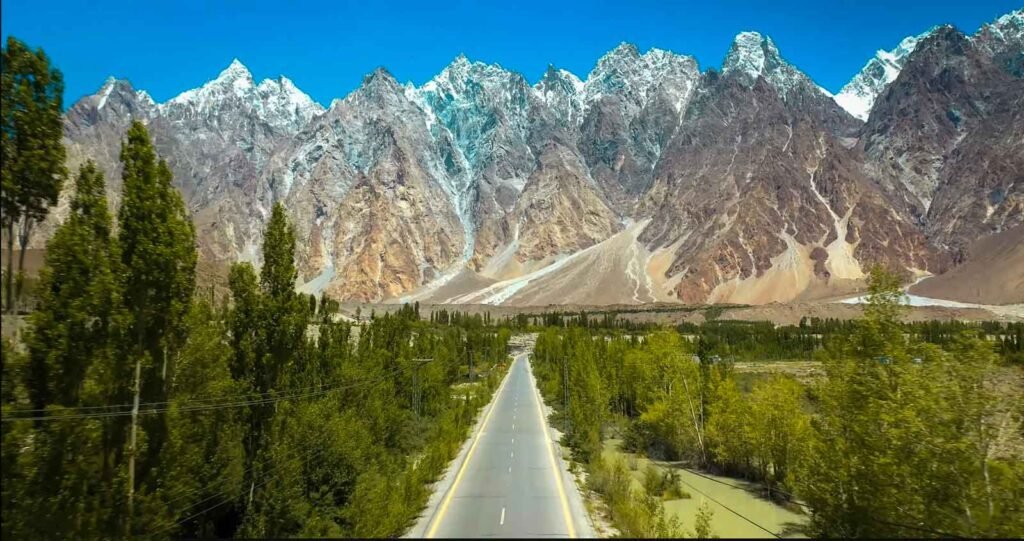
Spring represents one of the two best windows for visiting. The Karakoram Highway is typically open after winter, temperatures are pleasant (15-25°C during day), and the landscape begins transitioning from winter’s stark palette to spring green. The Passu Cones against blue spring skies create superb photography conditions.
April and May see fewer tourists than summer peak, meaning more peaceful viewpoints. The Hussaini Bridge is accessible. Cherry and apricot blossoms in lower Hunza add visual interest if you’re combining Passu with Karimabad.
Summer (July-August)
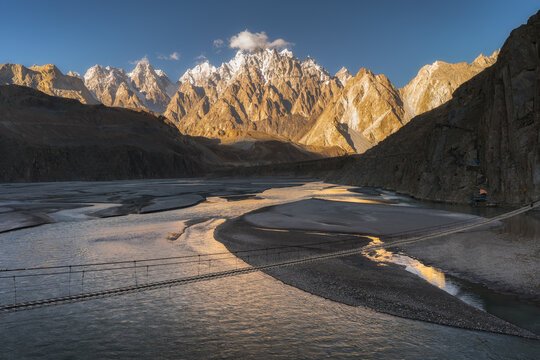
Peak tourist season means the Karakoram Highway sees maximum traffic and Passu village’s facilities operate at full capacity. Temperatures are comfortable (20-28°C at valley level), all destinations are accessible, and accommodation is readily available, though advance booking becomes necessary.
Monsoon influence can bring clouds and occasional rain, though this section of the Karakoram typically receives less monsoon impact than areas further east. Cloudy conditions can actually enhance certain photography, cloud-wrapped Passu Cones create atmospheric, moody images that differ significantly from clear-sky shots.
Autumn (September-October) – Best Overall
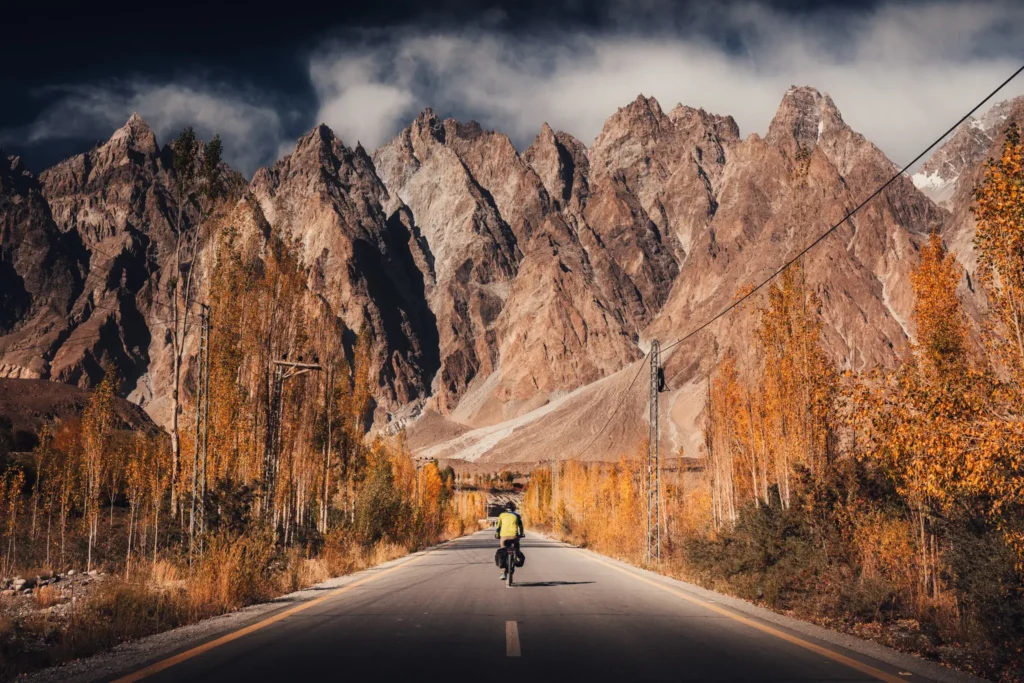
Many experienced photographers and travelers consider September-October the best time to see Passu Cones. Post-monsoon atmospheric clarity delivers the year’s most transparent skies, mountains appear sharper, more defined, and colors seem more saturated in this post-rain washed clarity.
Temperatures remain comfortable (12-22°C), tourist numbers have reduced from summer peak, and the quality of light at this time of year has a particular quality, lower sun angles creating longer shadows that enhance three-dimensional mountain forms. October specifically provides spectacular conditions before winter approaches.
Winter (November-March)
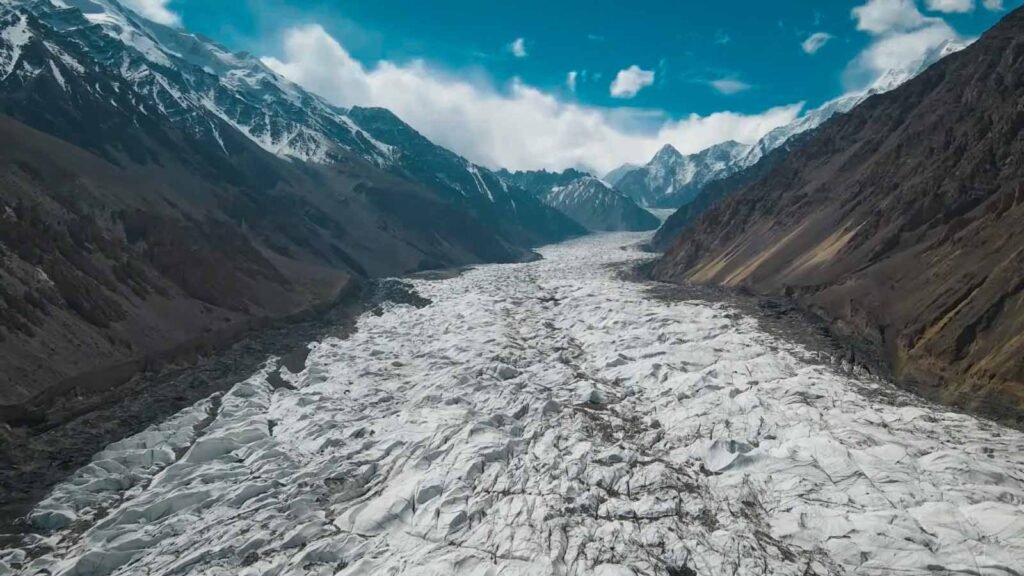
Winter in Passu is cold and the village becomes very quiet, most guesthouses close and services are minimal. The Karakoram Highway remains technically open through much of winter thanks to improved maintenance, but snowfall can create temporary closures.
For prepared and experienced cold-weather travelers, winter Passu offers extraordinary photography, snow-covered Cones in complete silence with essentially no other visitors. This requires specific preparation and realistic assessment of conditions.
Best Places to See Passu Cones
From the Karakoram Highway
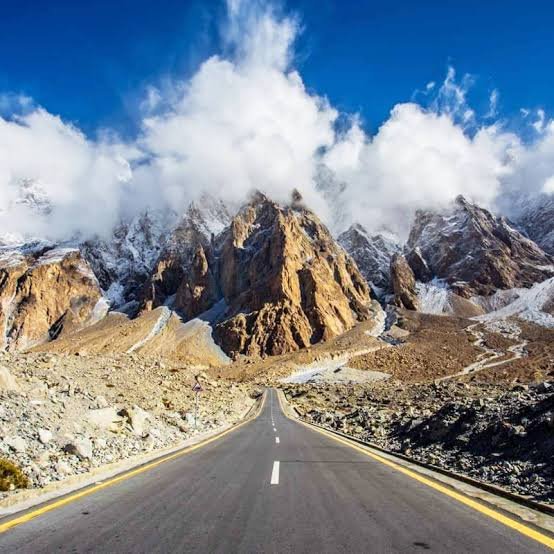
Multiple pull-off points along the highway offer different perspectives on the Passu Cones. The views improve progressively as you drive north toward Passu village, reaching maximum drama from the roadside near the village itself.
Passu Village Viewpoints
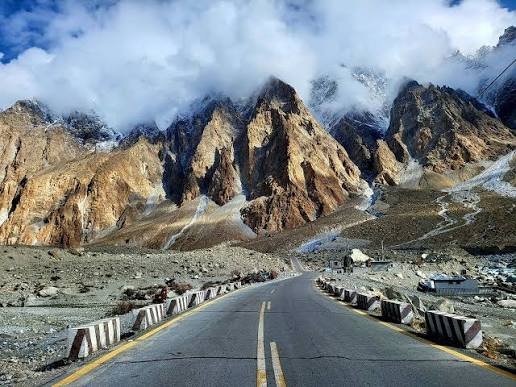
The village’s elevated position relative to the highway creates natural viewpoints where the Cones dominate the skyline. Walking through the village to its upper terraces provides foreground elements, traditional stone walls, apricot trees, irrigation channels, that landscape photographers use to create compositionally rich images.
The Hussaini Bridge Approach
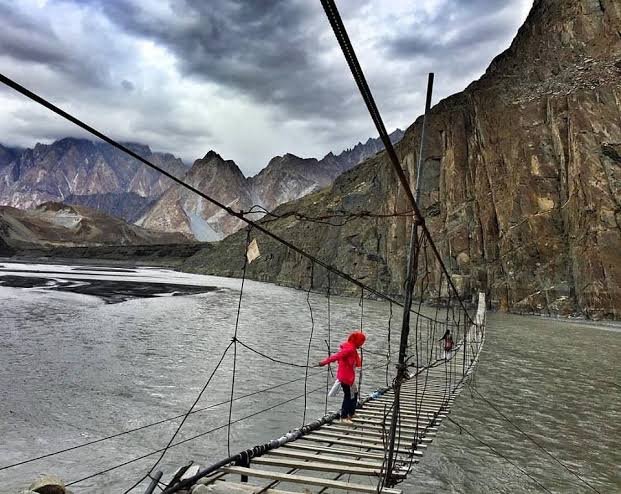
Walking toward and across the famous Hussaini Suspension Bridge places you between the Hunza River below and the Passu Cones behind, the bridge itself serving as foreground element for dramatic images.
Passu Cones Viewpoint (Passu Lake Area)
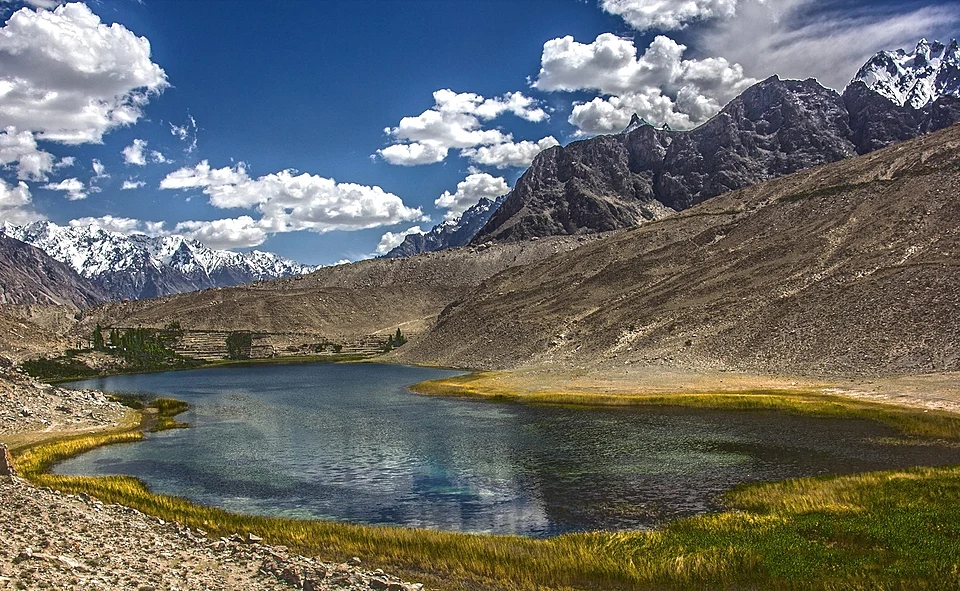
Approximately 2-3 kilometers from the village, the area toward the Passu Lake (seasonal) and Batura Glacier edge provides elevated perspectives where the Cones appear against the full glacier context.
The Old Silk Road Lookout
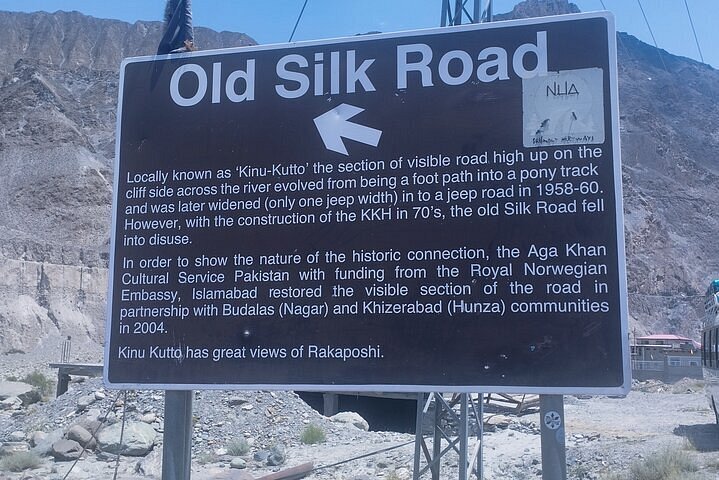
A short hike above the village following remnants of ancient Silk Road caravan paths reveals viewpoints that place the Cones in broader geographic context, the Hunza River valley, Attabad Lake visible in the distance, and the Cones rising dramatically to the west.
Things to Do Around Passu Cones
Cross the Hussaini Suspension Bridge
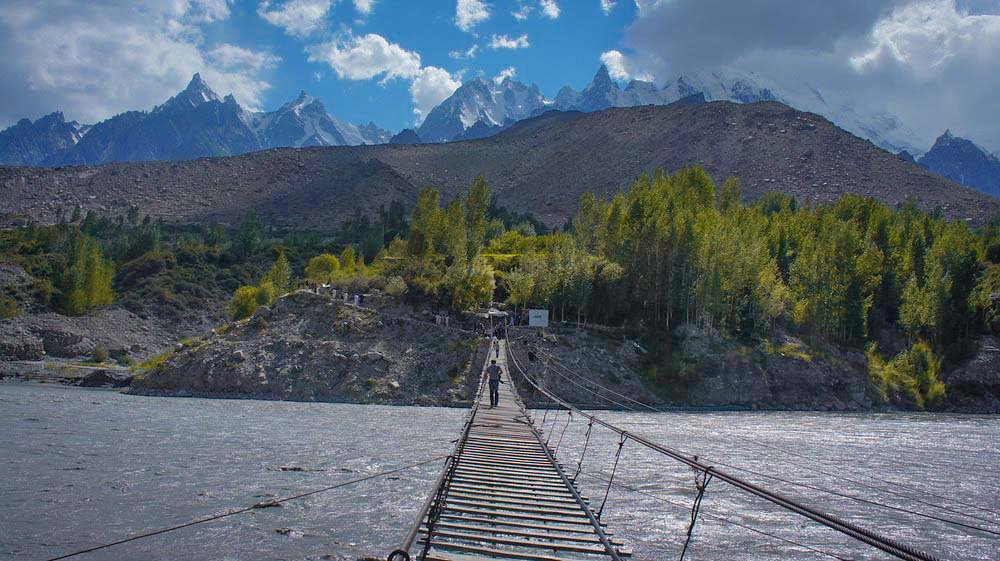
The famous Hussaini Suspension Bridge, often described as one of the world’s most dangerous bridges, provides an adrenaline experience with the Passu Cones as backdrop. The bridge’s missing planks, swaying motion, and dramatic height above the Hunza River create an adventure experience that most visitors find genuinely memorable.
Batura Glacier Exploration
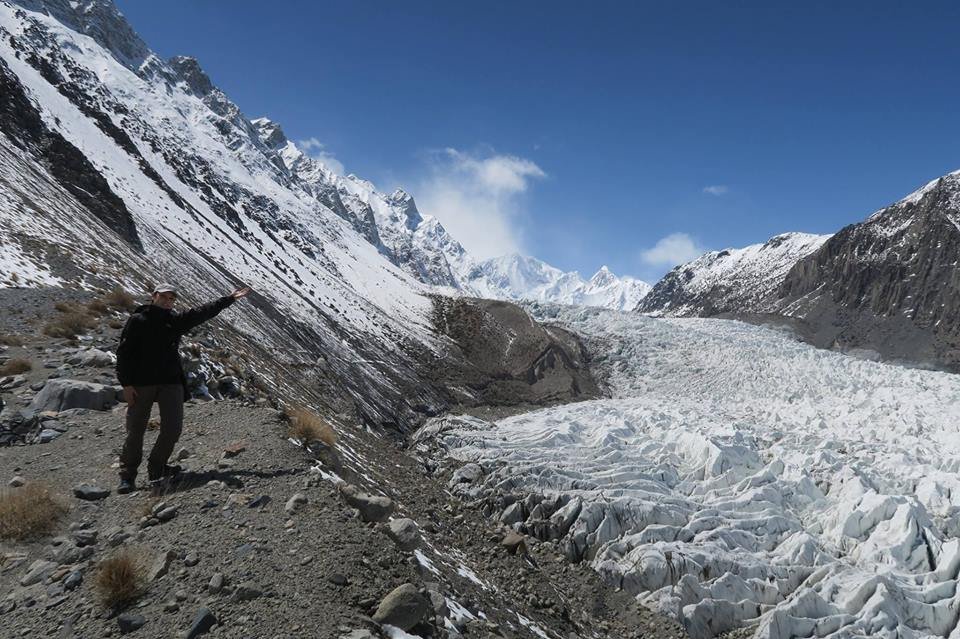
The Batura Glacier is accessible on foot from Passu village. Walking across the glacier’s terminal moraine and looking back at the Passu Cones from glacier level creates a perspective unavailable from the highway. The glacier walk requires appropriate footwear and preferably local guidance.
Trek the Ancient Silk Road Path
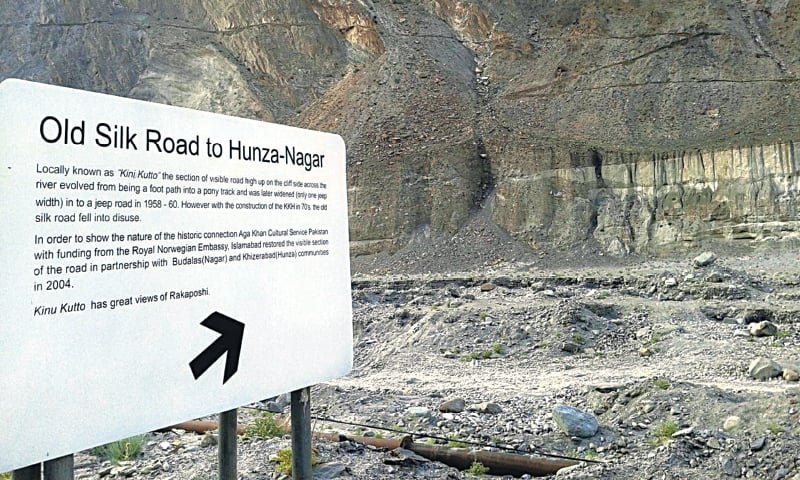
Short sections of the original Silk Road caravan path above Passu village are walkable, providing historical connection alongside spectacular views. This isn’t a demanding trek, more a historical walk with extraordinary scenery.
Passu Cones Photography Tour
The combination of multiple viewpoints, changing light through the day, and the formations’ photogenic character makes dedicated photography sessions worthwhile. Early morning light from the east illuminates the Cones’ west-facing surfaces dramatically; evening light creates different qualities worth capturing.
Village Cultural Exploration
Passu village is a traditional Wakhi community maintaining cultural practices distinctive from lower Hunza’s Burusho people. The Wakhi language, traditional clothing, local agricultural practices, and community hospitality create cultural experiences worth engaging with respectfully.
Camping Under the Cones
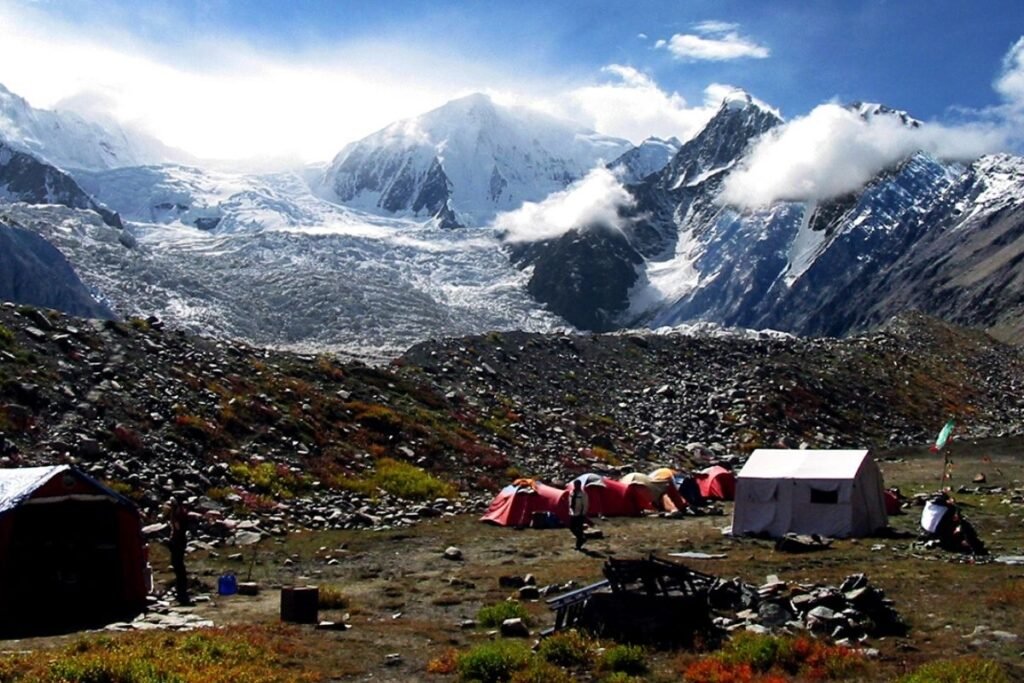
For those with appropriate equipment, camping near Passu with the Cones rising overhead at night creates experiences that hotel accommodation cannot replicate, stars appearing above the jagged spires, the silence of a high-altitude mountain valley, and dawn light appearing on the peaks while the valley remains in shadow.
Also Read: Cherry Blossom in Hunza Valley – Top Spots & Travel Guide
Places to Visit Near Passu Cones
Gulmit Village
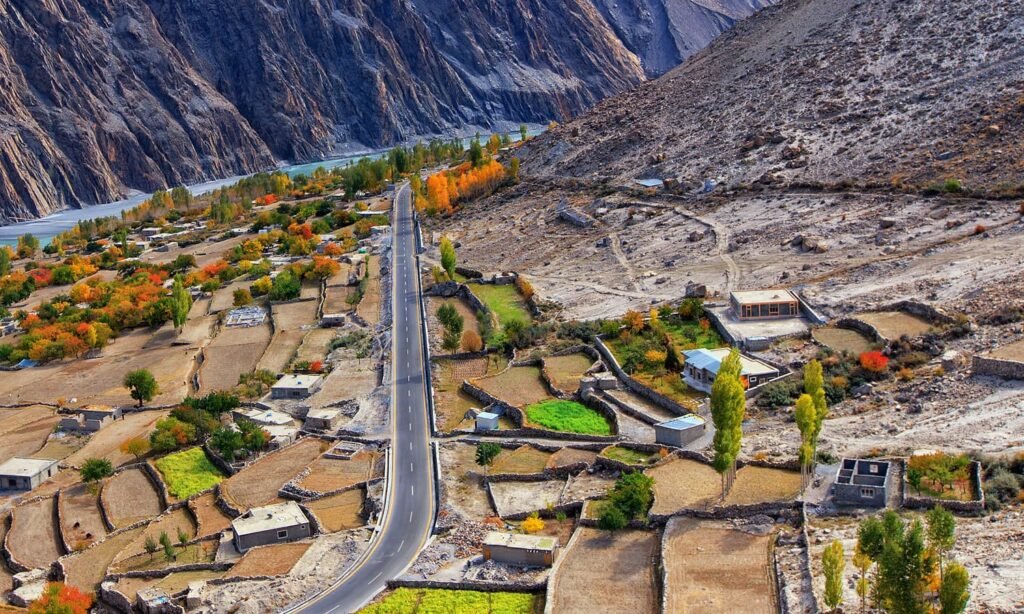
Approximately 15 kilometers south of Passu, Gulmit serves as Gojal region’s administrative center and offers the Hunza Cultural Heritage Museum, excellent context for understanding the region’s diverse cultural traditions before or after visiting Passu. The village’s orchards and traditional architecture reward quiet exploration.
Attabad Lake
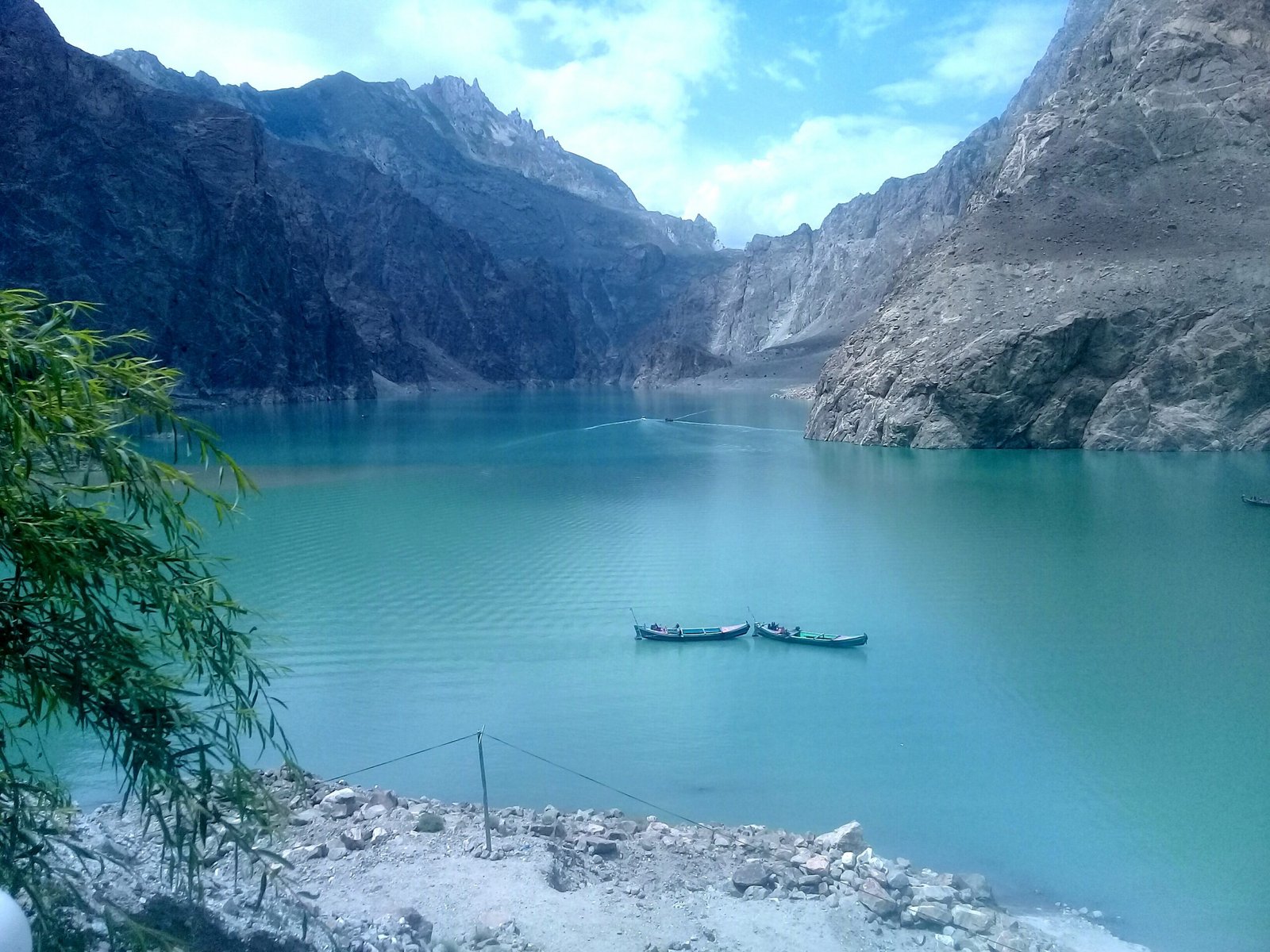
One of northern Pakistan’s most dramatically turquoise lakes, Attabad Lake was created by the 2010 landslide that dammed the Hunza River. The resulting lake, visible from parts of the Karakoram Highway approach to Passu, offers boat tours, shoreside photography, and the particular fascination of a geological event that transformed the landscape within living memory. Located approximately 30 kilometers south of Passu.
Ghulkin Village and Glacier

The lesser-visited Ghulkin offers a unique combination of traditional Wakhi village life and glacier access, the Ghulkin Glacier flows remarkably close to cultivated village land, creating the extraordinary juxtaposition of apricot trees and glacial ice.
Karimabad (Hunza)
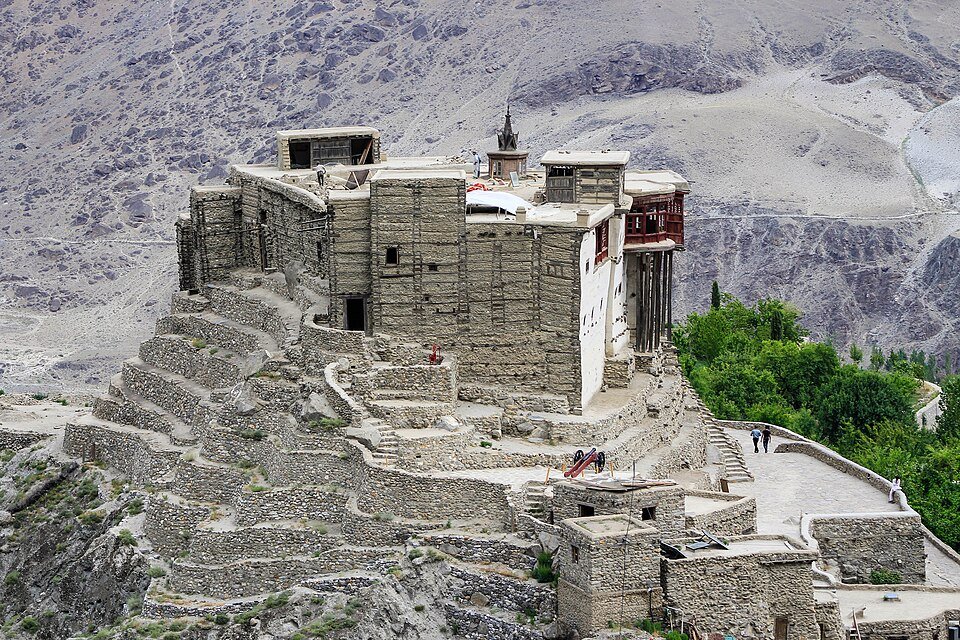
How far is Passu Cones from Hunza (Karimabad)? Approximately 110-120 kilometers, a 2-2.5 hour drive that most visitors make as part of Passu day trips from Karimabad. If Karimabad is your base, driving to Passu for the day is entirely practical.
Khunjerab Pass
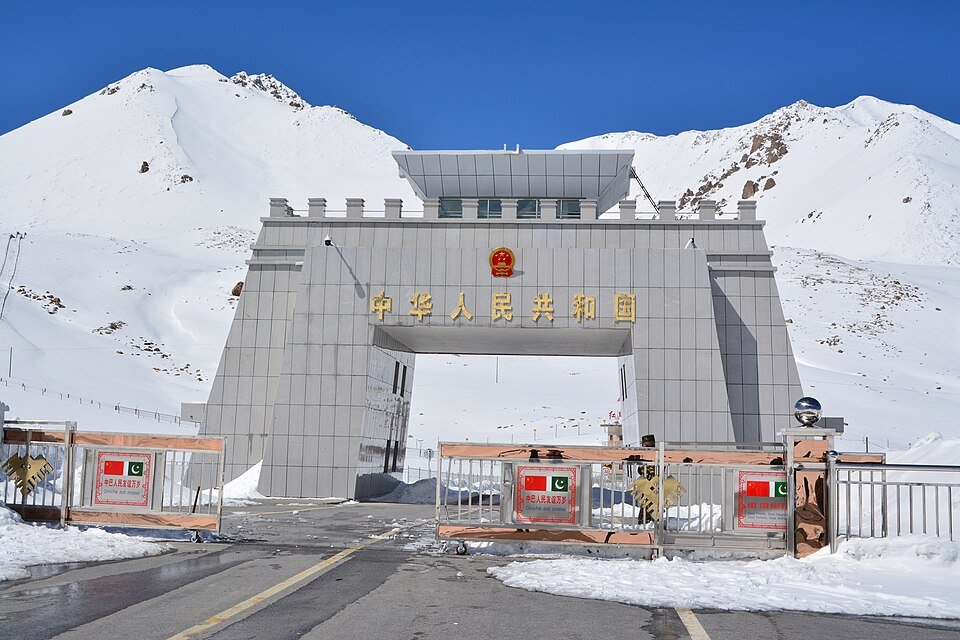
For adventurous travelers, continuing north from Passu leads to the Khunjerab Pass, the China-Pakistan border crossing at 4,693 meters elevation. The drive provides extraordinary views and the particular experience of standing at one of the world’s highest international border crossings. Requires China or Pakistan visa as appropriate for continuation.
Zarabad Village and Hussaini Bridge
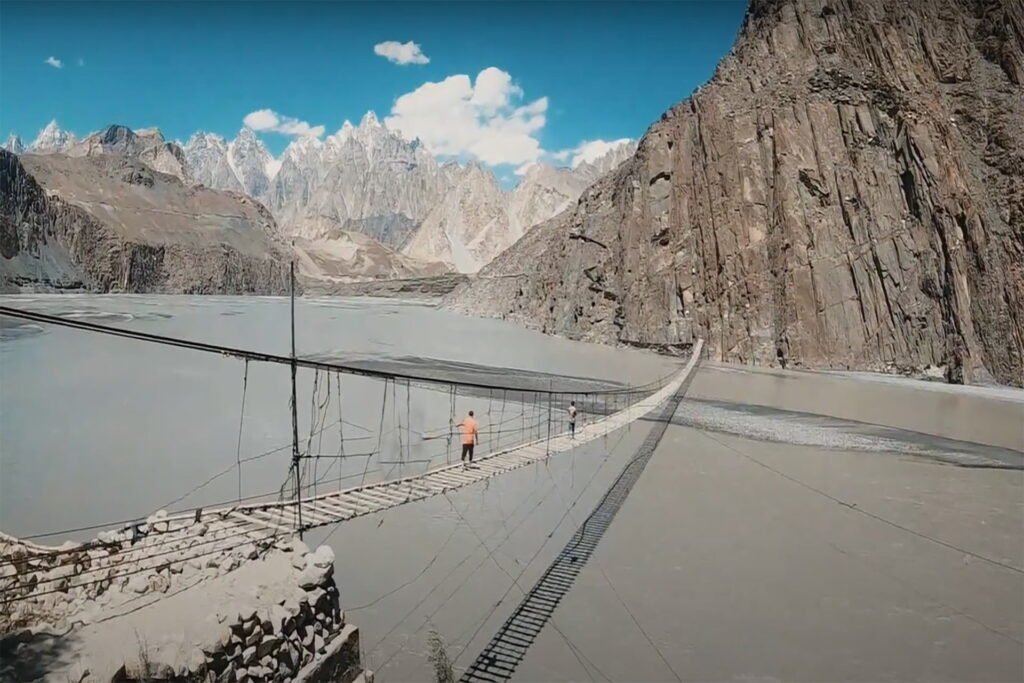
Zarabad, connected to Passu by the Hussaini Bridge across the Hunza River, offers a different perspective of the Passu Cones from the river’s opposite bank. The crossing itself is the famous experience; Zarabad provides the destination that makes the crossing purposeful.
Also Read: Top 10 Best Places to Visit in Hunza Valley
Where to Stay Near Passu
In Passu Village
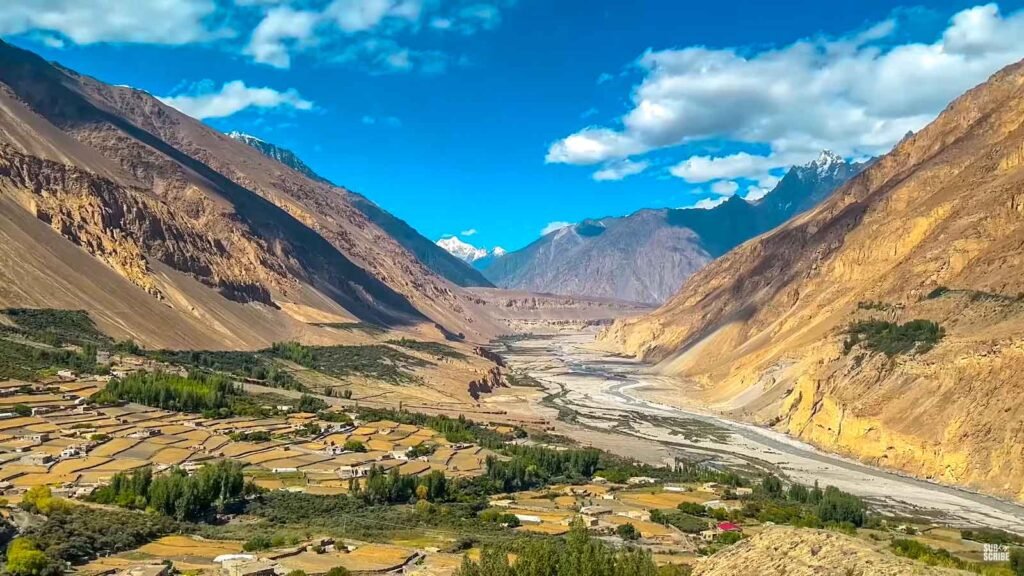
Several small guesthouses operate in Passu during the April-October season, offering simple but clean accommodation with dramatic mountain views:
Passu Inn: The most established accommodation option in Passu village, offering basic rooms and meals. The elevated position provides direct views of the Cones from certain rooms. Prices typically range from PKR 2,000 to 4,000 per room.
Local homestays: Several Wakhi families offer homestay accommodation, providing cultural immersion alongside mountain views. Prices are negotiable but typically very affordable, PKR 1,500-2,500 per person, including meals.
Important seasonal note: Most Passu accommodation closes November through March. Confirm availability before making winter visit plans.
In Gulmit (15 km south)
Gulmit offers more developed accommodation options that remain open longer into autumn and open earlier in spring. Options include mid-range hotels and guesthouses with better facilities than village-based accommodation while maintaining proximity to Passu for day visits.
In Karimabad (110 km south)
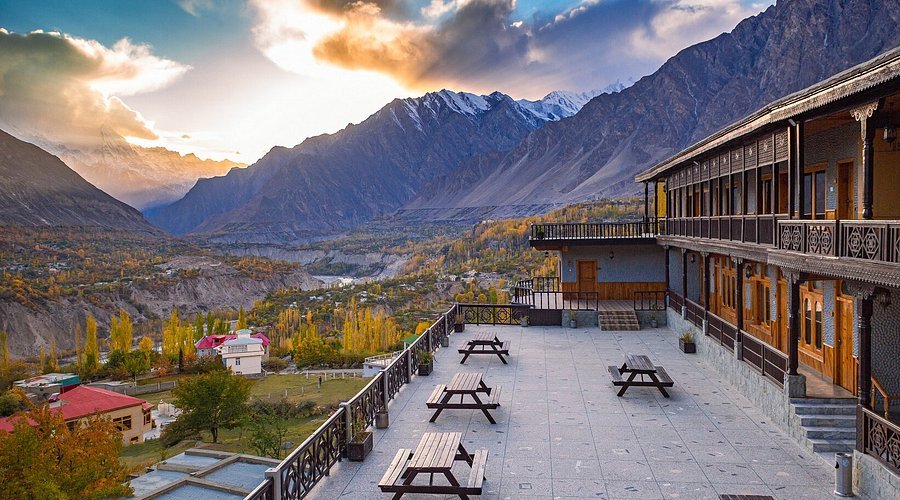
For visitors preferring better facilities, making Karimabad their base and doing Passu as a day trip is a common and practical approach. Karimabad offers Hunza’s widest range of accommodation, from budget guesthouses to comfortable hotels with valley views.
Passu Cones Travel Tips

Start early: The Passu Cones catch morning light on their eastern faces from first light, positioning yourself at viewpoints before 8:00 AM provides the most dramatic and photogenic conditions. This is particularly important for photographers but rewarding for all visitors.
Dress in layers: Passu’s elevation (2,400 meters at village level, higher at viewpoints) means temperatures drop significantly at night and in early morning even during summer. Carry warm layers regardless of daytime temperatures.
Don’t rush: Many visitors treat Passu as a quick stop on the way to Khunjerab or back from the north. Those who spend at least one night experience the peaks in multiple light conditions and discover aspects that rushed visits miss entirely.
Carry cash: No ATMs exist in Passu and mobile payment infrastructure is unreliable. Carry sufficient Pakistani Rupees for accommodation, food, guides, and contingency.
Download offline maps: Mobile signal in Passu is intermittent. Download offline maps before departure.
Acclimatization awareness: At 2,400 meters, some visitors experience mild altitude effects. Allow a day of quiet acclimatization before attempting hikes or glacier walks.
Respect community privacy: Passu is a living village, not a tourism installation. Photograph people respectfully with permission, don’t enter homes without invitation, and dress modestly in keeping with local Islamic conservative standards.
Passu Cones Travel Cost
Estimated costs for Passu visit (from Karimabad base, 1-2 day trip)
| Expense | Cost (PKR) |
| Transport Karimabad-Passu-return (hired car) | 5,000-8,000 |
| Accommodation in Passu (per night) | 2,000-4,000 |
| Meals in Passu (per day) | 1,000-2,000 |
| Hussaini Bridge crossing (informal fee) | 200-500 |
| Local guide for glacier walk | 1,000-2,000 |
| Miscellaneous | 500-1,000 |
| Total per person (1-night trip, shared car) | 5,000-10,000 |
Combined Hunza tour cost including Passu: Most visitors see Passu as part of broader Hunza tours. Eventica Travels’ comprehensive packages covering Karimabad, Attabad, Gulmit, and Passu provide significantly better value than individual arrangements.
Frequently Asked Questions
Passu Cones are located in Passu village, Gojal region, upper Hunza, Gilgit-Baltistan, Pakistan. The peaks rise directly above the village at approximately 2,400 meters elevation on the Karakoram Highway, approximately 110 kilometers north of Karimabad.
Yes, but with significant limitations. The Karakoram Highway remains technically open through most of winter, but most Passu accommodation closes November-March. Temperatures drop dramatically, services are minimal, and some viewpoint paths can be icy and dangerous. Prepared cold-weather travelers find winter Passu extraordinarily beautiful and completely uncrowded, but casual visitors should plan for April onwards.
Passu Cones distance from Karimabad (Hunza’s main tourist hub) is approximately 110-120 kilometers, taking 2-2.5 hours by road along the Karakoram Highway. This distance makes Passu accessible as a long day trip from Karimabad or a convenient overnight excursion.
Approximately 150 kilometers from Gilgit city, taking 2.5-3 hours by road. Gilgit serves as a regional hub with airport connections, making it a practical starting point for Passu visits.
Absolutely yes, the Passu Cones represent one of Pakistan’s most dramatic and accessible mountain spectacles. The combination of the formations’ extraordinary visual character, the Hussaini Bridge experience, Batura Glacier access, and authentic Wakhi cultural environment makes Passu a destination that consistently exceeds visitor expectations. It’s worth allocating at least one night rather than treating it as a drive-through stop.
Minimum recommended: One full day allows highway views approaching, Hussaini Bridge crossing, village viewpoints, and basic Batura Glacier edge exploration.
Recommended: Two days allows proper photography across multiple light conditions, Batura Glacier walk, village cultural exploration, and Zarabad crossing, without rushing.
Ideal: Three days incorporates everything above plus day excursions to Ghulkin Glacier and proper rest at altitude.
Yes. The main viewpoints are completely accessible to families including young children and elderly members, no hiking required for the fundamental Passu Cones viewing experience from the highway or village. Optional activities (Hussaini Bridge crossing, glacier walks) carry appropriate challenges and risks that families should assess honestly based on individual members’ capabilities. The Hussaini Bridge specifically isn’t appropriate for very young children or those with severe acrophobia.
Book a Private Hunza Tour with Eventica Travels
Experiencing the Passu Cones as part of a well-planned Hunza journey transforms an extraordinary view into a complete northern Pakistan adventure. Eventica Travels designs comprehensive private Hunza tours that include Passu, the Hussaini Bridge, Attabad Lake, Karimabad’s historic forts, and all the destinations that make upper Hunza one of Pakistan’s most rewarding travel regions.
Why Choose Eventica Travels for Your Passu & Hunza Tour?
✅ Private, customized tours designed around your interests and pace
✅ Expert local guides with deep knowledge of Hunza’s geography, culture, and history
✅ Reliable 4×4 transport with experienced mountain drivers
✅ Handpicked accommodation at all price ranges
✅ Photography-focused timing with guide knowledge of optimal light conditions
✅ Flexible itineraries adjustable for weather and personal preference
✅ Small group maximum, ensuring personalized experience
✅ 24/7 support throughout your journey
Featured Hunza & Passu Tour Packages
🏔️12 Days Group Tour Hunza & Skardu Valley
Islamabad → Gilgit → Hunza Valley → Altit Or Baltit Fort → Passu Cones → Hussaini Bridge → Khanpur Dam
Starting from: Rs. 55,500/-. (Per Person on Quad Sharing Room)
🏔️10 Days Group Tour Hunza & Naltar Valley
Islamabad → Besham → Naltar → Passu Cones → Hunza Valley → Passu Cones → Attabad Lake → Khanpur Lake
Starting from: Rs 42,500/. (Per Person on Quad Sharing)
🏔️10 Days Group Tour Hunza & Minimerg
Lulusar Lake → Naran/Kaghan → Babusar Top → Jaglot → Nomal → Domel Waterfall → Chilam → Hunza Valley → Attabad Lake → Passu Cones
Starting from: Rs. 54,000/. (Per Person on Quad Sharing)
📞 Contact Eventica Travels Today
📧Email: info@eventicatravels.com
📱WhatsApp: +92-336-3903371
Office Hours: Monday-Saturday, 10:00 AM – 11:00 PM
Conclusion: Why Passu Cones Belong on Every Pakistan Itinerary
The Passu Cones belong on every comprehensive Pakistan itinerary not because they’re the country’s highest peaks, they’re not, but because they represent something rarer: mountain beauty of extraordinary visual power made genuinely accessible. You don’t need mountaineering skills, helicopter access, or days of trekking. You need to drive north from Hunza on a clear day and let the landscape do what it does.
The formations will surprise you regardless of how many photographs you’ve seen. They always do. The scale, the angularity, the way they dominate the sky above Passu village, these qualities require standing beneath them to fully appreciate.
Go in autumn for the clearest skies. Spend at least one night to watch the light change across them. Cross the Hussaini Bridge to feel the adrenaline. Walk to the Batura Glacier’s edge to understand the ice that shaped these extraordinary peaks.
The Karakoram is full of extraordinary mountains. The Passu Cones are among its most unforgettable.
Eventica Travels – Revealing Pakistan’s Most Extraordinary Mountain Destinations
“Some mountains are climbed. Some are simply experienced. Passu Cones belong to the second, rarer category.”