Where to See Snow in Pakistan (and When It Usually Falls)
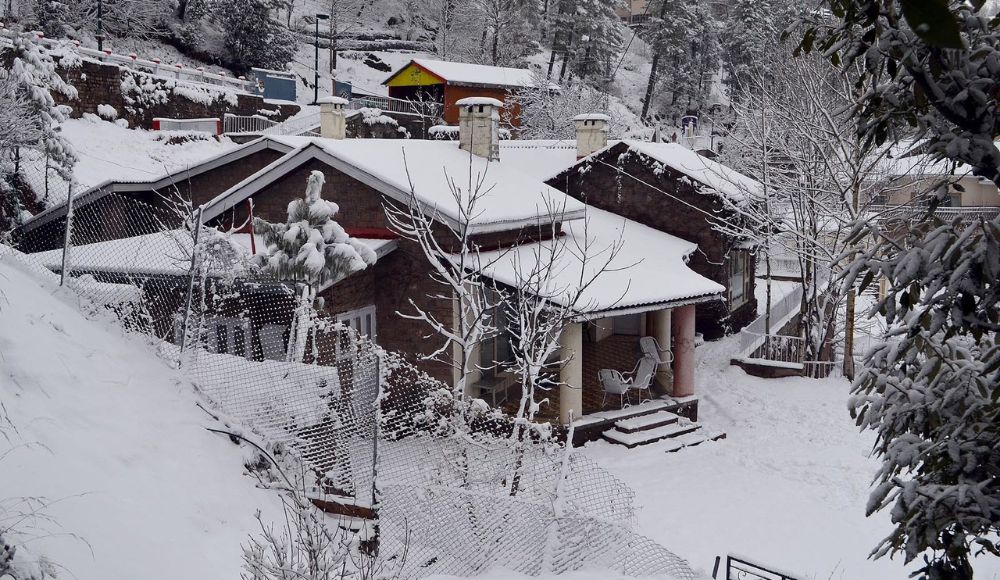
If you live in Karachi, snow is the one thing the coastline will never give you. Seeing it means heading north, and that is where the questions start. Which place is best? Which month? Is it worth going if the weather turns dry?
Pakistan has several places where snow is realistic every winter, from the pine hills near Islamabad to the Hindu Kush valleys of Swat and the high Karakoram. The honest part is that snow is never guaranteed on a particular weekend, and the best choice depends on the month, where you start and how comfortable you are with winter roads. This guide covers where to go, when snow usually falls, what the roads and passes are doing, and how to plan a trip that still works if the weather changes.
When does it snow in Pakistan?
In most of Pakistan’s popular snow destinations, snow typically falls between December and February, and January and February are usually the most dependable months. Higher areas such as upper Kaghan, Hunza and Skardu can see snow earlier, in late autumn, while places like Ziarat are less predictable. Exact timing changes every year, so check the Pakistan Meteorological Department (PMD) forecast before you book.
Winter snow in the north usually arrives with weather systems that PMD tracks from the west. That is why forecasts are short-range and why snowfall often comes in bursts rather than steadily across the season.
Where it snows: places and months at a glance
Easiest from Islamabad
- Murree: December to February (official 2026-27 season: Dec 15 to Feb 15), Good in most winters but varies. Best for day trips and first-time snow. Expect crowds, traffic and chain rules.
- Galiyat (Nathia Gali, Ayubia): December to February. Good in most winters. Best for pine forest walks. Roads can close in heavy snow.
Deeper snow and more adventure
- Naran, Kaghan and Shogran: December to February. Dependable at altitude. Best for deep snow scenery. Roads can close, and Babusar Top is shut from about November.
- Malam Jabba and Kalam (Swat): late November to early March, best in January and February. Good, but some winters are poor. Best for skiing, the chairlift and snow play. Snowless spells have happened.
- Neelum Valley (AJK): winter months. Dependable in upper areas. Best for remote valley scenery. Upper areas can close.
Quiet mountain winters
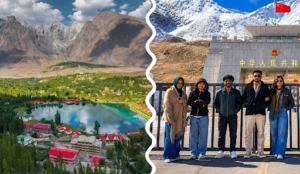
- Hunza and Skardu: snow on the surrounding peaks and often in the valleys. Dependable at altitude. Best for a quiet, dramatic winter. Deosai and Khunjerab are closed to tourists, and weather can cause delays.
- Chitral and Kalash: mainly December and January. Dependable. Best for winter culture and scenery. Very cold, with long travel times.
Less predictable
- Ziarat and Quetta: roughly January to March. Unpredictable. Some years bring little snow.
Murree and Galiyat: the easiest snow trips
Murree: Murree sits roughly 60 km north of Islamabad, which makes it the easiest snow trip in the country and also the most crowded. Authorities have set December 15 to February 15 as the official 2026-27 winter tourism season under a safety plan that includes facilitation centres, a fleet of snow-clearing vehicles and rules on parking and fares [VERIFY]. District advisories in recent winters have made snow chains mandatory in snowy areas, and heavy-snow days can bring temporary entry restrictions: in January 2026 vehicle entry was banned for a time and lifted once roads were cleared. If you can, go on a weekday, start early and leave before dark.
Galiyat (Nathia Gali and Ayubia): The Galiyat hills between Murree and Abbottabad are forested hill stations that usually see snow in the same weeks as Murree. They are a good option if you prefer walking among pines over a busy bazaar. Roads such as the Abbottabad to Murree route have closed during heavy snowfall in past winters, so keep your schedule flexible.
Naran, Kaghan and Shogran: deep snow
This is where deep snow is most likely on the Khyber Pakhtunkhwa side, mainly from December to February. Early snowfalls in past seasons have left hundreds of travellers stranded around Naran and needed rescue operations, so avoid arriving during or just after a major spell without checking the road status. Babusar Top, the pass linking Naran with Chilas, normally closes around November and reopens in late May or June. In 2025 it reopened in late May after about seven months. In winter, plan on the Kaghan side only and do not count on crossing into Gilgit-Baltistan this way.
Swat: Malam Jabba and Kalam
Malam Jabba is Pakistan’s best-known ski resort, with a chairlift, skiing and snow tubing when conditions allow. On average the snow season runs from late November to early March, and January and February are the best months. Long-term records on Snow-Forecast.com (2007 to 2026) show the first week of February as the snowiest, typically around 26 cm. Kalam, Mahodand, Gabin Jabba and Matiltan also draw winter visitors. The caution: January 2024 was a snowless winter in Kalam and many hotels stood empty, so book with flexible dates.
Skardu can be reached by road or domestic flight, subject to schedules and weather. Travelers should allow flexibility for possible delays, especially when connecting with other destinations.
Neelum Valley, Hunza and Skardu: quieter winter valleys
Neelum Valley (Azad Kashmir): Neelum Valley appears every winter on the snow advisory lists that PMD and provincial authorities issue for road closures. It is a good choice for travellers who want a quieter valley, but upper areas can close after heavy snow, so confirm access before you set out.
Hunza and Skardu: Hunza, Skardu and Astore are named in PMD’s snow advisories each winter. Winter here is cold and quiet, and the main towns are generally reachable by the Karakoram Highway, although weather can disrupt roads and Skardu flights. High-altitude sites such as the Deosai Plains are generally closed to vehicles in winter, and the Khunjerab Pass is normally closed to tourists. [VERIFY current status.] For the green-season version of these valleys, see Eventica’s summer Hunza and Skardu trips.
Chitral, Kalash, Ziarat and Quetta: bonus destinations
In Chitral and the Kalash valleys, snow typically falls in December and January and temperatures can drop to around minus 12 C. Ziarat and Quetta can turn white between roughly January and March, but some winters bring very little. Treat them as bonus destinations rather than a guaranteed snow plan.
Month-by-month snow calendar
- October to early November: only the highest areas see snow. Babusar Top usually closes around November, and an early snowfall can disrupt travel.
- Late November: first snow in the Swat uplands and Galiyat in many years. Too early to rely on for a booked trip.
- December: the season starts. Murree’s official season opens on December 15 The year-end holidays are the busiest time.
- January: the most dependable month, and the busiest. Heavy spells can trigger entry bans and road closures.
- February: still reliable. Malam Jabba is typically at its snowiest in the first week. Murree’s official 2026-27 season ends on February 15.
- March: the tail of the season. Snow melts below altitude, though Malam Jabba and Ziarat can still have some.
- April to June: only high ground holds snow. Babusar usually reopens in late May or June.
Is snow guaranteed, and how do you plan for it?
No. Snow depends on weather systems, and a winter can be generous or nearly dry. January 2024 is a reminder: Kalam and Malam Jabba, normally packed, had almost no snow and hotels stood empty. To protect your trip:
- Watch the PMD forecast three to five days ahead and choose your destination then.
- Book accommodation with free or flexible changes where possible.
- Pick a place with a Plan B. Malam Jabba has skiing when snow is good; Galiyat and Swat have walks and scenery even in dry spells.
- Add a buffer day in case a road closes.
Step by step:
- 1. Pick your window: January and February give the best odds. December works if you accept some risk.
- 2. Choose a region by your starting point: From Islamabad, Murree and Galiyat are the shortest trips. Naran, Swat and Neelum need more time. Hunza and Skardu are a separate, longer journey.
- 3. Check the forecast and advisories: Look at PMD and the local district administration for road and entry updates a few days before you leave.
- 4. Book flexible stays: Heavy snow can change your route overnight.
- 5. Prepare the vehicle or choose a driver who is: Chains, a full tank and sound brakes matter more than the car’s brand.
- 6. Build in buffer time: Plan to arrive in daylight and avoid tight same-day returns.
Winter driving, safety and what to pack
- Carry and fit snow chains: District advisories for Murree and the Galiyat have made them mandatory in snowy areas.
- Avoid night driving during snowfall: Traffic police in Murree have advised against it.
- Fill the tank and check brakes, wipers, heaters and defoggers: before you leave.
- Park only where allowed: Parking on main roads or slopes blocks snow-clearing machines and is prohibited during the season.
- Never sleep in a stationary car with the engine running if snow can block the exhaust: Deaths in the January 2022 Murree tragedy were linked to carbon monoxide poisoning.
- If you are stuck, call the police helpline 15 or Rescue 1122: and stay with your vehicle unless told otherwise.
- Travelling with older parents or small children?: Pick lower, more accessible places and keep drives short.
What to pack: Layers (thermal base, fleece, waterproof outer), waterproof boots with grip, gloves, a warm hat, sunglasses for snow glare, sunscreen, a power bank, a small first-aid kit, snacks, water and a blanket in the car.
Snow trips for international visitors
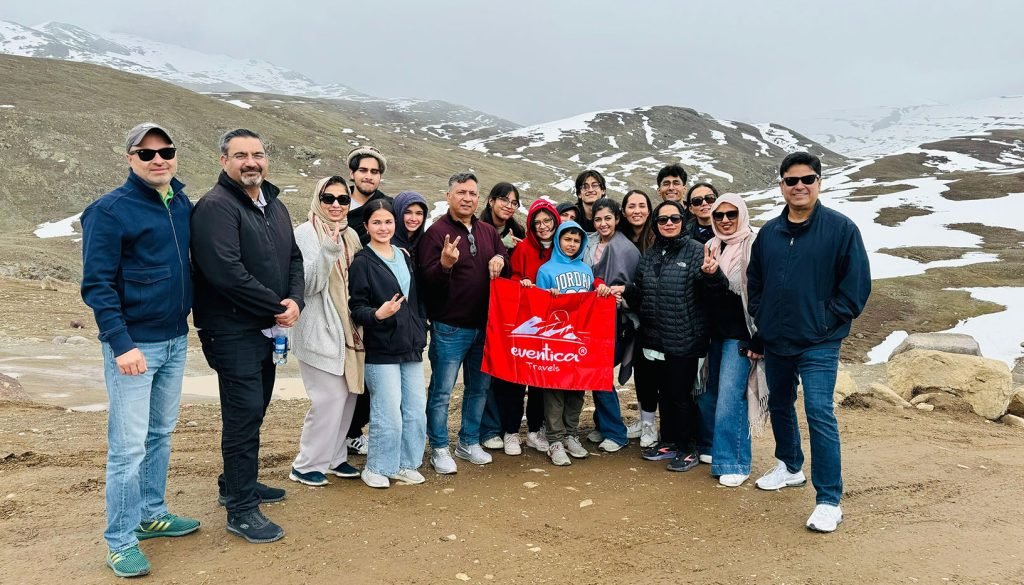
Murree, Galiyat, Swat and Kaghan are the most common choices for first-time visitors. Check the current visa requirements for your passport and any area-specific rules before you book, and check your own government’s travel advice for the regions you plan to visit. Eventica Travels can help with visa assistance and hotel bookings; confirm details with our team, since requirements change.
International visitors can combine Lahore's historic attractions with northern destinations through Pakistan tour packages for international travelers.
Planning a snow trip from Karachi
Karachi has a coastal climate and does not get snow, so snow trips start with a journey north. Most Karachi travellers go through Islamabad or Rawalpindi for Murree, Galiyat, Naran and Swat, or fly or drive to Gilgit-Baltistan for Hunza and Skardu. Weather can delay or cancel mountain flights, so avoid tight connections. If you only want a cooler winter escape closer to home, Gorakh Hill is an option, but it is not a snow destination.
Every traveler has a different idea of the perfect holiday. With Eventica Travels' Trip Designer, you can create a personalized Pakistan tour that matches your interests, travel dates, preferred destinations and budget.
Frequently Asked Question
When does it snow in Pakistan?
Which is the best month to see snow in Pakistan?
Where is the easiest place to see snow from Islamabad?
Does it snow in Karachi?
No. Karachi has a coastal climate. Travellers from Karachi usually go north, most often via Islamabad or Rawalpindi, to see snow.
Is Babusar Top open in winter?
Can I see snow in Hunza and Skardu in winter?
Is it safe to drive to Murree in snow?
Plan Your winter Holiday with Eventica Travels
Whether you are looking for an autumn getaway, a family holiday, a scenic photography trip or a customized northern Pakistan adventure, planning your itinerary in advance can make your journey more comfortable.
Eventica Travels offers group tours, customized private trips, transportation and accommodation coordination, and travel planning for local and international visitors.
Explore our Pakistan group tour packages or private tours to find an itinerary suited to your travel needs.
Browse By Categories
Recent Posts
Where to See Snow in Pakistan (and When It Usually Falls)

Travelling in Pakistan with Elderly Parents: Complete Guide

International Visa Services In Pakistan
PAKISTAN IN WINTER: Where to Go from December to February
Hunza vs Skardu: Which Destination Is Better?