
What is Karambar Lake?
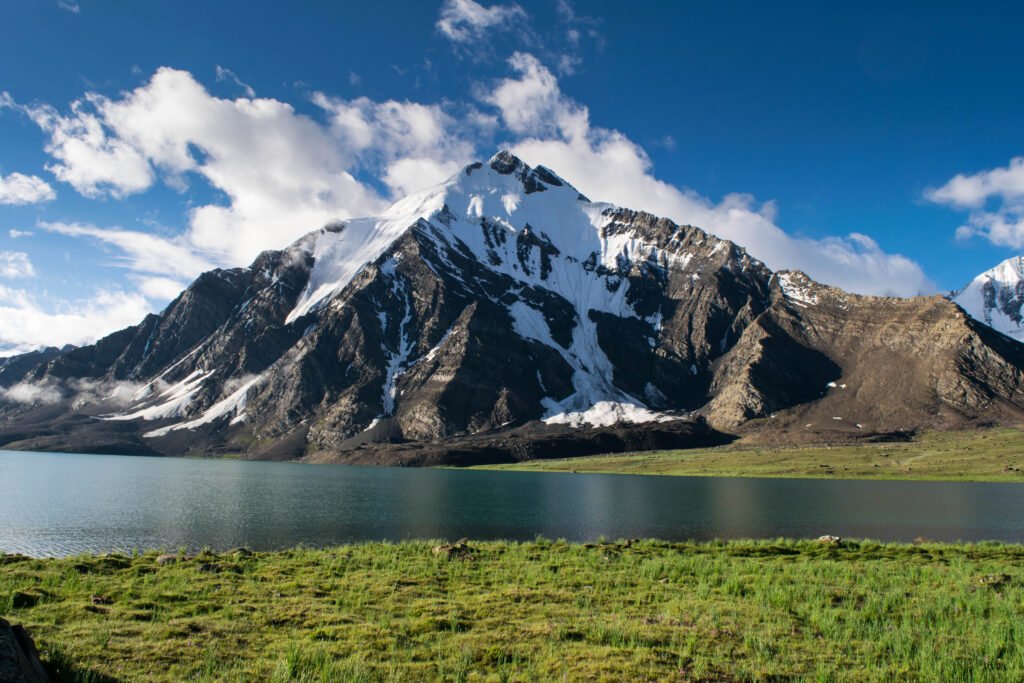
Karambar Lake is one of the most beautiful and remote lakes in Pakistan. Its water is so clear and still that the snow-covered mountains around it reflect perfectly on the surface, like a giant mirror.
What makes this lake special is where it sits. It lies exactly on the border between two provinces, Gilgit-Baltistan and Khyber Pakhtunkhwa. On one side is the Ishkoman Valley and on the other is the Broghil Valley. People from different cultures have lived around this lake for hundreds of years.
When you stand there, all you can hear is the wind coming off the glaciers and maybe a bird flying past. There are no crowds, no noise, just pure wilderness.
Since 2011, the area around the lake is protected as Qurumbar National Park, which keeps its wildlife and nature safe.
Karambar is not the kind of place you stumble upon. You have to work hard to get there. But those who make the journey say it feels less like visiting a lake and more like finding something that was hidden just for them.
Where is Karambar Lake located?

Karambar Lake is situated in Pakistan’s remote northern regions, approximately 140 kilometers from Chitral city and 250 kilometers from Gilgit. The lake sits precisely on the boundary dividing Gilgit-Baltistan’s Ghizer District from Khyber Pakhtunkhwa’s Upper Chitral District, making it accessible (with considerable effort) from both regions.
GPS Coordinates: Approximately 36.9667° N, 73.7833° E
The lake’s isolation contributes significantly to its pristine condition—no roads reach Karambar, meaning the only access involves multi-day trekking through challenging terrain that filters out casual visitors and ensures only dedicated adventurers experience this wilderness treasure.
History and Importance of Karambar Lake

Historically, the Karambar region served as an important link in traditional trade and migration routes connecting Chitral with Gilgit-Baltistan. Nomadic Wakhi herders have used the valleys surrounding Karambar for centuries as summer grazing grounds, establishing a sustainable relationship with the high-altitude ecosystem that continues today.
The lake and surrounding valleys hold cultural significance for local communities who attribute spiritual importance to this remote landscape. Ancient legends speak of supernatural beings inhabiting these mountains, and traditional stories passed through generations reflect the reverence locals maintain for this extraordinary place.
Why Karambar Lake is Famous
Karambar Lake has gained recognition among adventure travelers and mountaineering enthusiasts for several distinctive characteristics:
Pakistan’s Second Highest Lake: At its remarkable elevation, Karambar ranks as Pakistan’s second-highest lake, surpassed only by Rush Lake in Nagar.
Border Lake: The unique geographical position straddling two provinces creates ecological diversity rarely found in single locations.
Pristine Wilderness: Complete absence of roads, permanent settlements, or commercial development preserves Karambar’s untouched natural state.
Challenging Access: The demanding trek required to reach Karambar ensures only committed adventurers arrive, maintaining an exclusive, unspoiled atmosphere.
Stunning Scenery: The combination of turquoise water, snow peaks, alpine meadows, and high-altitude desert creates landscape diversity of extraordinary beauty.
Karambar Lake Height and Facts
Elevation: 4,272 meters (14,016 feet) above sea level
Length: Approximately 3.9 kilometers
Maximum Depth: 52 meters
Water Source: Glacial melt and mountain springs
Water Temperature: 4-8°C year-round
Freezing Period: January to April
Best Viewing Season: July to September
The lake’s high altitude means thin air, intense UV radiation, significant temperature fluctuations between day and night, and weather that can change from sunny to stormy within hours—factors trekkers must prepare for carefully.
How to Reach Karambar Lake

Chitral to Karambar Lake Route
The Chitral approach represents the more commonly used route, though “commonly” remains relative given Karambar’s remoteness:
Starting point: Chitral city
Drive to: Sor Laspur village (approximately 140 km, 5-6 hours)
Trek begins: From Sor Laspur
Trek duration: 4-5 days round trip
Trek distance: Approximately 35-40 kilometers one way
The route passes through Broghil Valley, one of Pakistan’s most beautiful and isolated valleys, crossing multiple river systems and ascending through diverse ecological zones from valley floors to high-altitude passes.
Gilgit to Karambar Lake Route
The Gilgit-Baltistan approach involves longer overland travel but offers different scenic experiences:
Starting point: Gilgit city
Drive to: Ishkoman Valley, then Chatorkhand village (approximately 250 km, 8-10 hours)
Trek begins: From Chatorkhand
Trek duration: 3-4 days to reach lake
Trek distance: Approximately 30-35 kilometers
This route traverses Ishkoman Valley’s dramatic landscapes before ascending toward the provincial boundary where Karambar sits.
Also Read: Attabad Lake Hunza Valley: A Complete Travel Guide to Pakistan’s Turquoise Wonder
Karambar Lake Trek Guide

Trek Difficulty and Fitness Level
The Karambar Lake trek rates as challenging to extremely challenging, requiring excellent physical fitness, previous high-altitude trekking experience, and mental preparation for remote wilderness conditions.
Difficulty factors:
- High altitude with limited acclimatization opportunities
- Long daily trekking distances (15-20 km)
- Multiple river crossings (some requiring wading)
- Steep ascents and descents
- Complete isolation with no rescue infrastructure
- Unpredictable weather conditions
- Carrying heavy camping loads (unless hiring porters)
Minimum requirements:
- Previous multi-day trekking experience
- Excellent cardiovascular fitness
- Altitude tolerance (tested on prior trips)
- Mental resilience for challenging conditions
Best Time to Visit Karambar Lake

July to September represents the only viable window for accessing Karambar Lake, with each month offering distinct conditions:
July: Snow melting continues at high elevations; trails can be muddy; river crossings more challenging due to higher water volume; wildflowers begin blooming.
August: Peak season with most stable weather; snow largely cleared from passes; temperatures warmest (though still cold); optimal trekking conditions.
September: Autumn colors emerging; temperatures cooling; fewer trekkers; weather becoming less predictable toward month’s end.
October-June: Lake and access routes completely inaccessible due to heavy snow, extreme cold, and avalanche danger.
Weather and Temperature at Karambar Lake

Daytime temperatures (July-August): 10-18°C
Nighttime temperatures: 0-5°C
High altitude effects: Temperatures feel colder due to wind chill and thin air
Weather patterns: Mornings typically clear; afternoon clouds and possible rain/snow
Sudden changes: Weather can deteriorate rapidly—sunny to stormy within hours
Karambar Lake Trek Itinerary
Day 1: Sor Laspur to Lashkargaz (base camp), 15 km, 6-7 hours
Day 2: Lashkargaz to Karambar Lake via Karambar Pass, 18 km, 8-9 hours
Day 3: Rest day at lake, exploration, photography
Day 4: Return trek to Lashkargaz, 18 km, 7-8 hours
Day 5: Lashkargaz to Sor Laspur, 15 km, 5-6 hours
This represents the minimum itinerary; extra acclimatization days improve safety and enjoyment.
Camping at Karambar Lake

Camping is the only accommodation option at Karambar—no structures, huts, or permanent facilities exist. Designated camping areas near the lake’s shores provide relatively flat ground protected from wind.
Camping Essentials:
- Four-season tent rated for high-altitude conditions
- Sleeping bag rated to -10°C minimum
- Insulated sleeping mat
- Cooking equipment and fuel
- Water purification system
- All food for trek duration
- Weather-proof equipment storage
Permits and NOC Requirements
Currently, no formal permits are required for Pakistani citizens to trek to Karambar Lake from either Chitral or Gilgit-Baltistan sides, though this could change. Foreign tourists should verify current NOC (No Objection Certificate) requirements with tourism authorities in Gilgit or Chitral before departure.
Hiring local guides from either Sor Laspur or Chatorkhand is strongly recommended—they provide navigation expertise, cultural insights, emergency support, and contribute economically to local communities.
Also Read: Top Places to Visit in Skardu
Things to Do at Karambar Lake

Photography: Capture the turquoise lake against mountain backdrops during golden hour
Contemplation: Experience complete wilderness isolation and mountain silence
Circumnavigation: Walk around the lake (allow full day, challenging terrain)
Wildlife observation: Spot Himalayan ibex, marmots, golden eagles
Stargazing: Zero light pollution creates exceptional night sky viewing
Rest and acclimatization: Simply be present in this extraordinary landscape
Photography and Sightseeing
Karambar Lake offers photographers extraordinary opportunities—the turquoise water color, reflection of surrounding peaks, alpine meadows in foreground, and dramatic weather create compositions that reward both technical skill and patience. Early morning and late afternoon provide optimal lighting conditions when low-angle sun illuminates mountains while leaving lakes in shadow, creating dramatic contrasts.
Wildlife and Natural Beauty
The Karambar ecosystem hosts diverse wildlife adapted to high-altitude conditions: Himalayan ibex navigating impossibly steep slopes, Himalayan marmots whistling warnings from rock piles, golden eagles soaring on thermals, occasional snow leopard evidence (tracks, scat) though sightings are extremely rare, and various high-altitude bird species.
The natural beauty extends beyond the lake itself—surrounding valleys feature wildflower meadows, glacial streams, rocky peaks, and the stark beauty of high-altitude landscapes where life persists against extreme conditions.
Facilities and Accommodation
Facilities: None exist at Karambar—complete self-sufficiency mandatory
Nearest services: Sor Laspur (Chitral side) or Chatorkhand (Gilgit side)
Emergency support: Zero—expedition-level self-reliance required
Communication: No mobile signals; satellite communicator recommended
Travel Cost and Budget Guide
Total estimated cost (per person, 6-day trek):
Guide/Porter services: PKR 20,000-30,000
Transportation (Chitral-Sor Laspur): PKR 8,000-12,000
Food supplies: PKR 5,000-8,000
Camping gear rental (if needed): PKR 10,000-15,000
Contingency funds: PKR 5,000-10,000
Total: PKR 48,000-75,000 per person
Essential Packing List
✅ Four-season tent and cold-rated sleeping bag
✅ Multiple clothing layers including insulated jacket
✅ Waterproof rain gear
✅ Sturdy trekking boots and extra socks
✅ Trekking poles
✅ Sunglasses (Category 4) and sunscreen SPF 50+
✅ First-aid kit with altitude sickness medication
✅ Water purification tablets/filter
✅ High-energy food and snacks
✅ Headlamp with extra batteries
✅ Navigation tools (GPS, maps, compass)
✅ Satellite communicator (highly recommended)
Safety Tips for Travelers

⚠️ Never trek solo—minimum two people, preferably groups
⚠️ Hire local guides—their expertise invaluable for navigation and safety
⚠️ Acclimatize properly—spend days at intermediate altitudes before attempting Karambar
⚠️ Weather awareness—retreat if conditions deteriorate
⚠️ Physical preparation—train extensively before attempting
⚠️ Emergency planning—carry satellite communicator; inform authorities of plans
⚠️ River crossings—exercise extreme caution; guides know safe crossing points
FAQs About Karambar Lake
A: No. This trek requires excellent fitness and previous high-altitude trekking experience.
A: No. Only July-September provides feasible access; other months are snow-bound and dangerous.
A: None whatsoever. Complete self-sufficiency with camping gear and supplies is mandatory.
A: Even in summer, temperatures drop to 0-5°C; proper cold-weather gear essential.
Final Thoughts
Karambar Lake represents adventure travel at its purest—a destination demanding significant physical effort, careful planning, and genuine wilderness skills, while rewarding those who make the journey with experiences of extraordinary natural beauty and profound isolation. This is not casual tourism but expedition-level adventure suited only for serious trekkers prepared to embrace both challenges and rewards of Pakistan’s high-altitude wilderness.
For those ready to answer the call, Karambar Lake awaits with turquoise waters reflecting peaks that have witnessed centuries pass in silence, offering the rare gift of true wilderness in an increasingly accessible world.
Ready to trek to Karambar Lake?
Eventica Travels organizes expertly guided expeditions with experienced local guides, comprehensive logistics, and safety protocols ensuring your journey to this remote paradise is as safe as it is unforgettable.
Eventica Travels—Pioneering Pakistan’s High-Altitude Adventures