
Few places in Pakistan carry the weight of history quite like the cliff face at Jehanabad Buddha Swat. Carved into a reddish rock wall in the 7th or 8th century CE, this 7-meter seated figure has looked out over Swat Valley for over a thousand years—through the rise and fall of dynasties, the spread of Buddhism across Asia, and more recently, a determined restoration effort after Taliban militants damaged its face in 2008. Pakistan’s largest seated rock carving and the finest surviving example of Gandhara artistry by most archaeological accounts, the Jahanabad Buddha is not the kind of monument you simply photograph and move on from.
What makes it truly extraordinary is the civilization it represents. Swat served as one of the most significant centers of Buddhist learning, pilgrimage, and artistic expression in all of Asia from as early as the 2nd century BCE through to the 10th century CE, drawing monks, scholars, and travelers from across the known world. The Jehanabad Buddha is what remains of that world, carved in stone and still standing. For anyone tracing Pakistan’s Buddhist heritage, this single site captures more history than most destinations manage across an entire region.
Jahanabad Buddha – Largest Seated Buddha of Swat, Pakistan
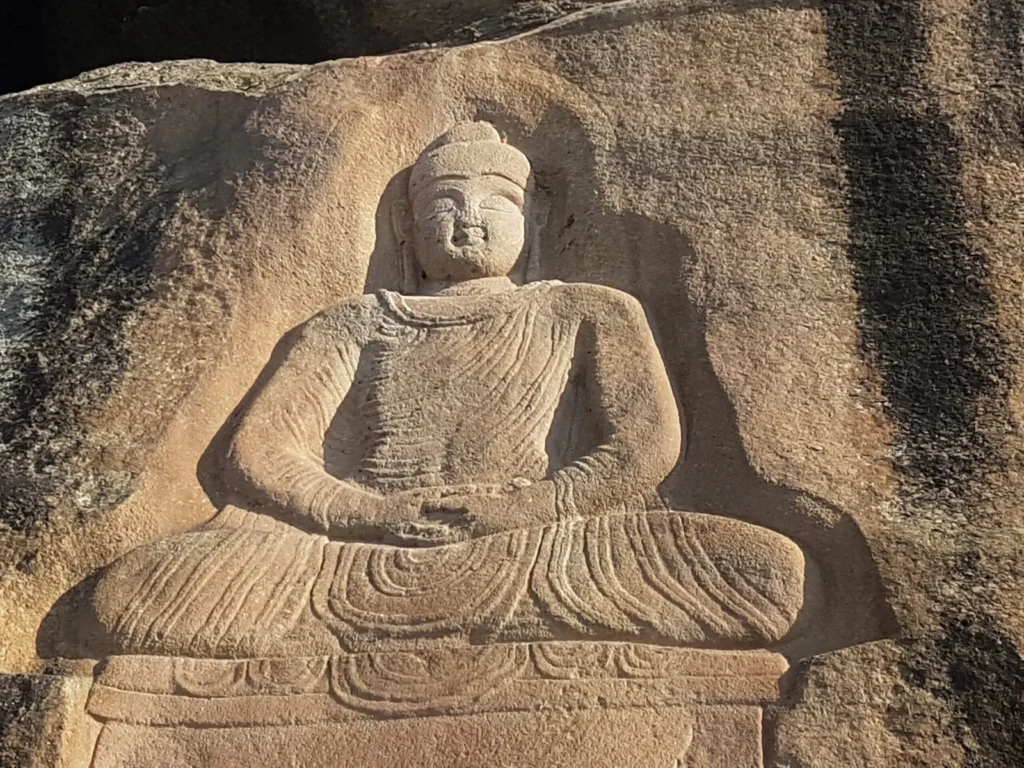
The Jahanabad Buddha claims distinction as Swat Valley’s largest seated Buddha carving, measuring an impressive 6.5 meters (approximately 21 feet) in height. This colossal sculpture, carved directly into a cliff face during the Gandhara period (roughly 7th-8th century CE), depicts Buddha in the classic meditation posture known as dhyana mudra—legs crossed, hands resting peacefully in the lap, representing the moment of enlightenment.
Unlike free-standing statues that can be lifted, shifted, or hidden away, this Buddha was cut directly from the living rock of the cliff; it belongs to this mountain and always will. That choice alone tells you something about the people who made it. Gandharan artisans who carved this figure over 1,400 years ago were not building something temporary or movable; they were making a statement in stone that was meant to outlast everything around it. And the scale confirms what the location already suggests: this was never a quiet local shrine. A 7-meter seated Buddha, carved into a cliff face visible from the valley floor, was built to draw people from great distances, and it did exactly that, pulling Buddhist monks, pilgrims, and devoted travelers toward it from across the ancient world.
The sculpture’s positioning on a prominent cliff face overlooking the valley demonstrates strategic spiritual geography, placing Buddha literally above the mortal realm while remaining visible to travelers and pilgrims approaching from considerable distances. This visibility would have served both inspirational and directional purposes, guiding the faithful toward the monastic complex that surrounded it.
Historical Background of Jahanabad Buddha
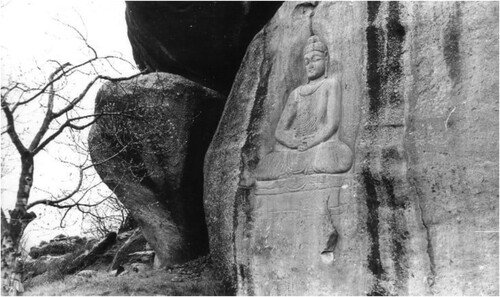
The Jehanabad Buddha Swat came to life at a moment when this region was Buddhism’s northwestern frontier, a crossroads where Greco-Roman, Persian, and Indian artistic traditions were actively reshaping one another. Alexander the Great’s march through the area in 327 BCE had planted Hellenistic influence deep into local soil, and over the centuries that followed, it fused with Buddhist iconography to produce the Gandhara art style, changing how the Buddha was depicted across the entire ancient world.
Before Gandhara art, Buddha was represented symbolically—through footprints, empty thrones, or bodhi trees, never in human form. The Greco-Buddhist synthesis that occurred in regions like Swat introduced anthropomorphic Buddha images for the first time, forever changing how Buddhism expressed its spiritual concepts visually. The Jahanabad Buddha exemplifies this revolutionary artistic tradition.
Historical and archaeological findings indicate that between the 5th and 10th centuries CE, the Jahanabad site was likely part of a wider Buddhist monastic and pilgrimage network. Chinese Buddhist travelers, including Xuanzang, who visited the Swat region around 630 CE, described many Buddhist centers across the valley, although direct references to Jahanabad are still debated by historians.
The gradual decline of Buddhism in the region, accelerated by various invasions and the spread of Islam from the 10th century onwards, led to the abandonment of sites like Jahanabad. For centuries, these monuments existed in relative obscurity, known primarily to local communities who preserved oral traditions about the “old gods” carved in stone.
Marc Aurel Stein’s Visit and Research in Swat Valley
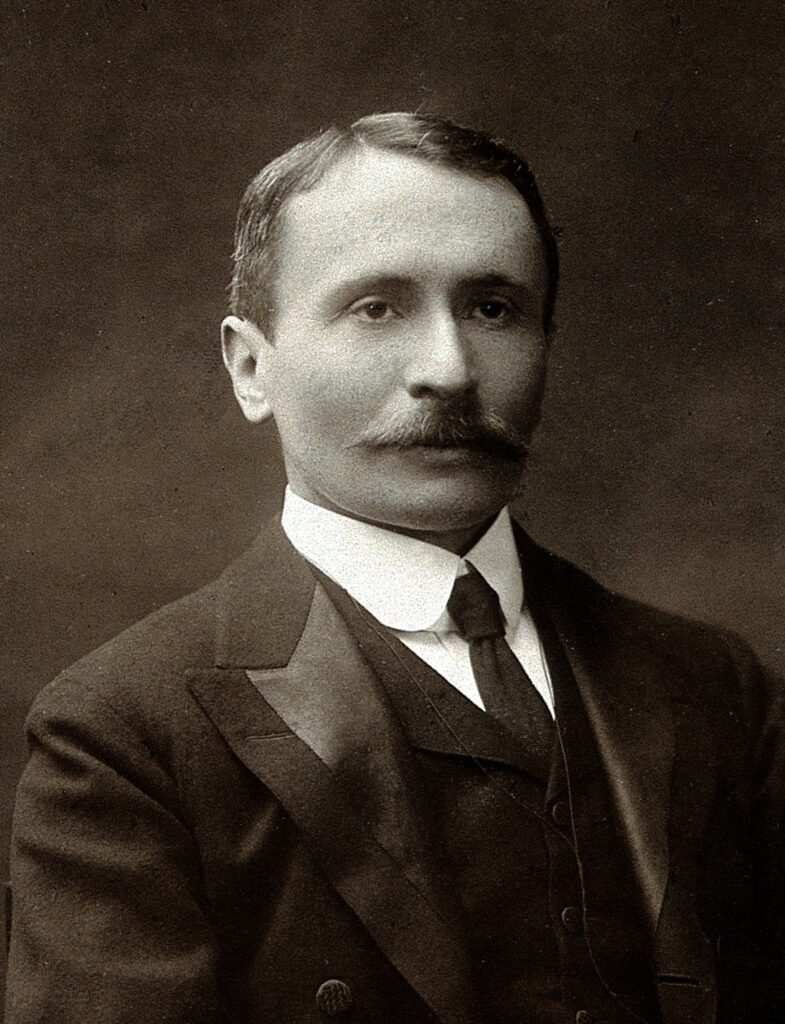
The modern rediscovery and documentation of the Jahanabad Buddha owes much to pioneering archaeologists of the early 20th century, particularly Sir Marc Aurel Stein, the Hungarian-British explorer and archaeologist who conducted extensive surveys throughout Central Asia, including Swat Valley, in the early 1900s.
Stein carefully wrote down details, took photos, and made maps of the old Buddhist places in Swat. Because of his work, scholars from all over the world became interested in this region. He showed that Swat was not just a small, unimportant place for Buddhism — it was actually a major center that kept some of the best examples of Gandhara art. The photos he took of places like Jahanabad are very useful even today. They show what these sites looked like before they got damaged, and they help people figure out how to fix and restore them.
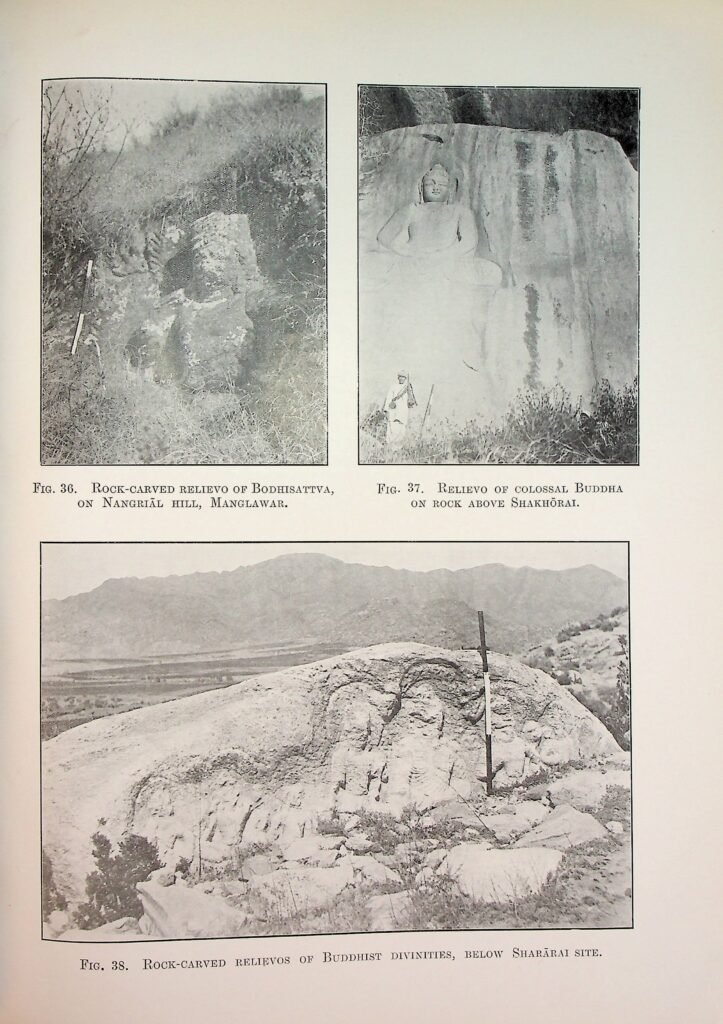
After Stein, many other research teams came to study Swat’s Buddhist history. Italian teams visited several times between the 1950s and 1980s. Over time, all this research helped build a clear picture of how important Swat really was in the history of Buddhism and its art.
Interested in exploring Pakistan’s Buddhist heritage? Eventica Travels offers specialized cultural tours covering Swat Valley’s ancient Buddhist sites, including Jehanabad Buddha, with expert guides who bring this fascinating history alive.
Features of Jahanabad Buddha Rock Carving
The Jehanabad Buddha Swat exhibits several distinctive artistic and architectural features that reveal both aesthetic sophistication and spiritual symbolism:
Meditation Posture: The Buddha sits in padmasana (lotus position) with hands in dhyana mudra, symbolizing meditation and inner peace—the moment of enlightenment under the bodhi tree.
Carved Relief: Unlike some Gandharan sculptures that are nearly three-dimensional, the Jahanabad Buddha is carved in high relief directly from the cliff face, creating a permanent integration between artwork and natural landscape.
Halo (Nimbus): Though weathered, traces of a carved halo behind Buddha’s head remain visible, indicating the radiance of enlightenment—a common Gandharan artistic convention borrowed from Greco-Roman traditions of depicting divine figures.
Robes and Drapery: The sculpture originally displayed detailed carving of Buddha’s robes with naturalistic folds, demonstrating the Hellenistic artistic influence characteristic of Gandhara art. While weathering has diminished fine details, the overall garment structure remains discernible.
Facial Features: The serene expression, downcast eyes in meditation, and curled hair (ushnisha) represent classic Buddha iconography, though facial details have suffered from centuries of weathering and deliberate damage.
Size and Structure of the Jahanabad Buddha
Standing approximately 6.5 meters (21 feet) tall, the Jahanabad Buddha ranks among Pakistan’s largest rock-carved Buddhist sculptures. To appreciate this scale, imagine a two-story building—the Buddha towers at a similar height, creating an imposing yet peaceful presence.
The carving extends approximately 4 meters in width at the base, encompassing not just the Buddha figure but surrounding decorative elements including the halo and platform upon which the figure sits. The depth of carving varies—some portions cut 60-80 centimeters into the cliff face, creating dramatic shadows and three-dimensional effects when sunlight strikes at optimal angles.
The cliff face itself, composed of relatively soft metamorphic rock, presented both advantages and challenges to ancient sculptors. The stone’s workability allowed detailed carving, but its softness also made the sculpture vulnerable to weathering and damage over centuries.
Location of Jahanabad Buddha Swat Pakistan
The Jahanabad Buddha is found in a village called Jehanabad, about 20 kilometers north of Mingora, which is the main city of Swat Valley. The carving sits in the Kabal Tehsil area, on the side of a cliff. From this spot, you can look down over farming fields and the wide valley below. The high position made it easy to see from far away and also kept it safe from harm.
GPS Location: About 34.8622° N, 72.3847° E
The area around the Buddha is still very beautiful today. You can see stepped farming fields, old Pashtun villages, and tall mountains all around. This peaceful setting helps visitors imagine what life looked like hundreds of years ago, when Buddhist pilgrims used to walk through these same paths on their way to pray and worship.
Access Route and Visitor Experience
Reaching the Jehanabad Buddha Swat requires traveling to Swat Valley, typically via Islamabad-Peshawar-Mingora route. From Mingora, the journey to Jehanabad village takes approximately 30-40 minutes by road.
Access Process:
- Travel to Mingora city (Swat’s main hub)
- Take local transport or private vehicle toward Kabal
- At Jehanabad village, ask locals for “Buddha khani” (Buddha carving)
- Short walk (5-10 minutes) from road to cliff base
- Steps and pathways lead to viewing platforms near the carving
The site lacks extensive tourist infrastructure—no formal ticket office, visitor center, or commercial facilities exist. This absence of commercialization maintains authenticity but also means visitors should come prepared with water, snacks, and appropriate clothing for walking on uneven terrain.
Local villagers are generally welcoming and helpful, often volunteering to guide visitors to the Buddha and share oral histories passed through generations. Small tips for local guides are appreciated and support the community.
Planning a Swat Valley cultural tour? Eventica Travels arranges comprehensive Buddhist heritage tours including Jehanabad Buddha, Takht-i-Bahi, and other archaeological sites with expert guides, comfortable transport, and all logistics handled professionally.
Jahanabad Buddha as a Cultural and Religious Complex
The Jahanabad Buddha never existed in isolation but formed the centerpiece of a larger Buddhist complex comprising multiple structures serving monastic, educational, and pilgrimage functions.
Archaeological surveys have identified remains of:
Monastic Cells: Living quarters carved into rock and constructed from stone where monks resided, meditated, and studied Buddhist texts.
Stupas: Hemispherical structures containing relics or marking sacred spots, found both carved in relief and as free-standing constructions around the site.
Assembly Halls: Larger spaces where the monastic community gathered for teaching, debate, and collective meditation.
Votive Stupas: Smaller stupas commissioned by individual patrons as merit-making offerings, scattered throughout the complex.
These structures, though largely ruined, reveal the site’s significance beyond a single carved image—this was a living religious community that existed for centuries, contributing to Buddhist scholarship and practice.
Nearby Monastery, Stupa, and Cave Structures
Surrounding the main Jahanabad Buddha carving, the cliff contains numerous caves, carved niches, and structural remains that comprised the monastic complex:
Meditation Caves: Small carved chambers where individual monks practiced solitary meditation, some still containing carved benches or sleeping platforms.
Stupa Niches: Carved recesses that once housed smaller Buddha images or stupas, creating a gallery of devotional art along the cliff face.
Water Channels: Ingenious carved channels directing rainwater away from the main Buddha and living quarters, demonstrating sophisticated engineering understanding.
Inscriptions: Fragmentary Kharosthi script inscriptions (the ancient script of Gandhara) remain visible in some locations, providing valuable historical and religious information.
These features collectively paint a picture of a thriving religious institution where dozens of monks lived, studied, and taught Buddhism’s profound philosophies while creating art that would survive millennia.
Damage to Jahanabad Buddha in 2008
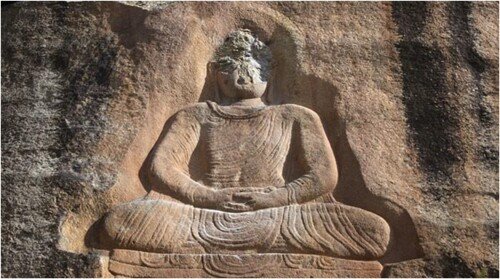
The Jehanabad Buddha suffered devastating damage in October 2007 (often mistakenly cited as 2008) when militants, during their control of Swat Valley, attempted to destroy the sculpture using explosives. This act of cultural vandalism formed part of a broader campaign targeting Buddhist heritage throughout the region, similar to the Taliban’s 2001 destruction of the Bamiyan Buddhas in Afghanistan.
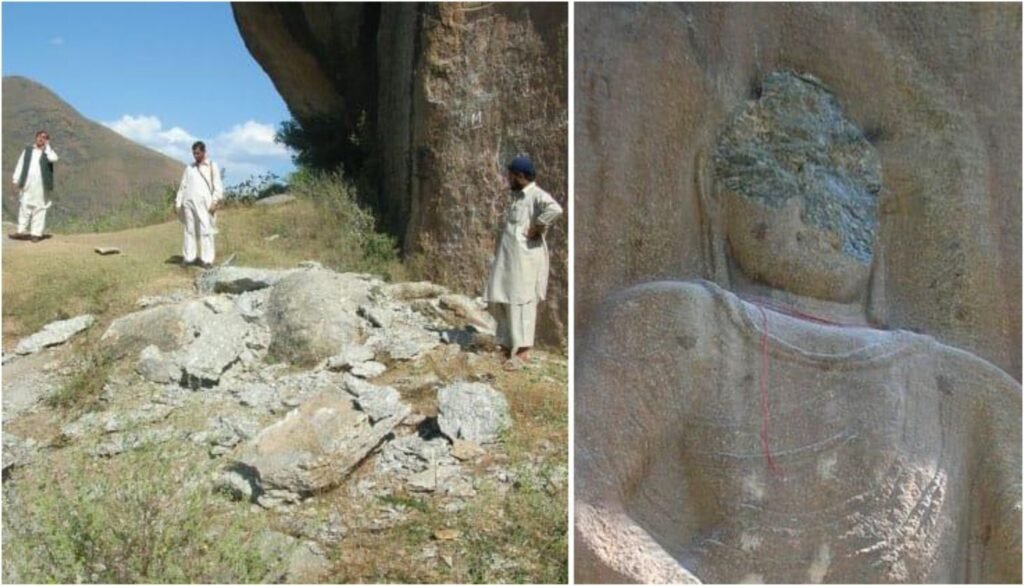
The explosion severely damaged the Buddha’s face, upper torso, and surrounding carved details. The lower portion survived relatively intact, but the assault erased centuries-old artistic details that had weathered naturally over time. Photographs from before and after the attack starkly illustrate the destruction—what erosion spared over 1,400 years, extremism attempted to erase in moments.
This tragic incident brought international attention to Pakistan’s endangered Buddhist heritage and galvanized efforts toward protecting and restoring these irreplaceable monuments.
Role of KPK Government and Restoration Efforts
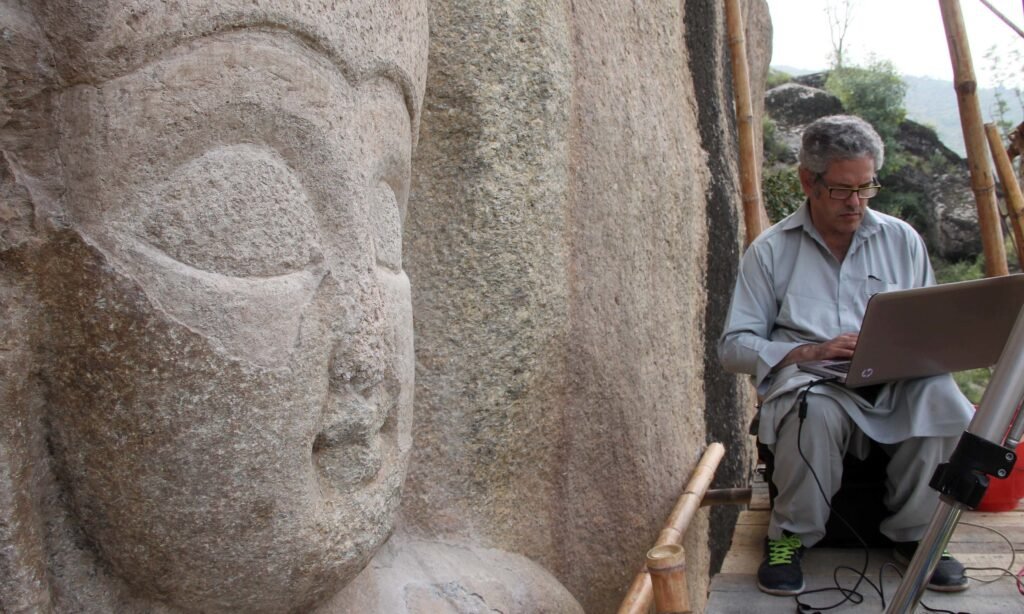
The Khyber Pakhtunkhwa (KPK) provincial government, under whose jurisdiction Swat falls, has played a crucial role in preserving and restoring the Jahanabad Buddha and broader Buddhist heritage.
Key governmental initiatives include the following:
- Archaeological Security: Posting guards at vulnerable sites to prevent further vandalism
- Documentation Projects: Comprehensive surveying and photographing of Buddhist sites
- Restoration Funding: Allocating provincial budget resources for repair and conservation
- Tourism Development: Promoting Buddhist heritage as cultural tourism attractions
- International Cooperation: Partnering with UNESCO and foreign archaeological missions
These efforts reflect growing recognition that Pakistan’s Buddhist heritage represents not just historical relics but valuable cultural assets deserving protection, study, and promotion.
Also Read: Best Time to Visit Swat Kalam Malam Jabba
Preservation of Buddhist Heritage in Swat Valley
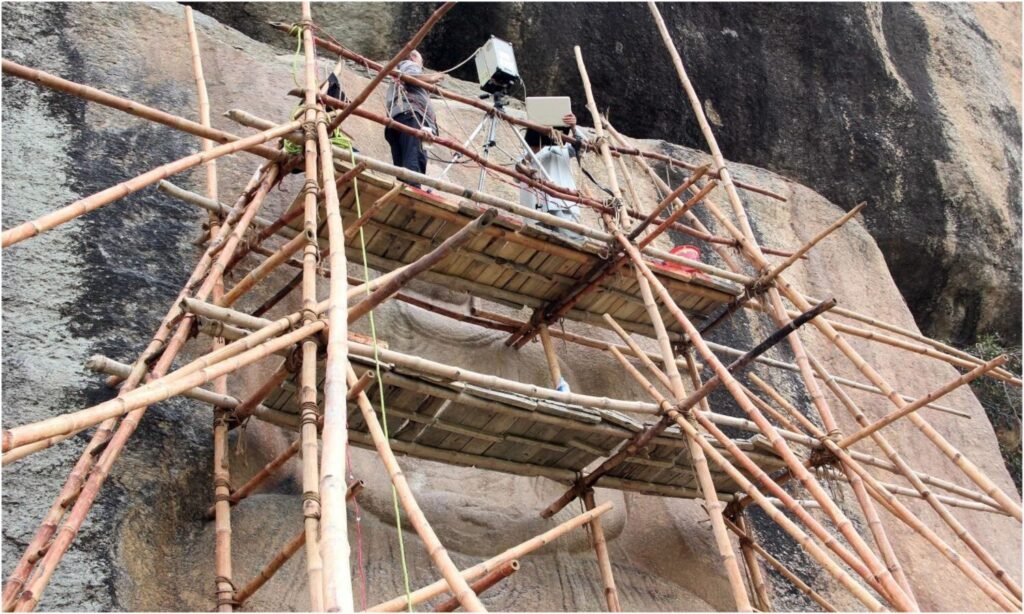
Swat Valley contains Pakistan’s highest concentration of Buddhist archaeological sites, over 400 identified locations, including monasteries, stupas, rock carvings, and settlements. Preserving this extraordinary cultural landscape requires sustained commitment, adequate funding, community engagement, and security from both natural deterioration and human threats.
Current preservation challenges include:
Environmental Degradation: Weathering, water damage, and vegetation growth threatening stone structures.
Development Pressure: Modern construction and agriculture encroaching on archaeological sites
Funding Limitations: Insufficient resources for comprehensive conservation programs.
Security Concerns: Potential threats from extremist ideologies opposed to pre-Islamic heritage
Tourism Management: Balancing accessibility with conservation needs
Despite challenges, the Jehanabad Buddha and Swat’s Buddhist heritage represent opportunities, for education, cultural pride, interfaith dialogue, and sustainable cultural tourism that benefits local communities.
Conclusion: A Monument Worth Protecting and Visiting
The Jehanabad Buddha is not just an old stone carving. It tells the story of people who searched for meaning, made beautiful art, and shared their beliefs with others. This content reads as if it is human-written. It connects today’s Pakistan to its long and rich history. This content reads as if it is human-written. This monument lived through powerful empires, survived hundreds of years, and even went through deliberate damage, yet it still stands, and people who visit it are left speechless.
For travelers who want a true and meaningful trip, visiting the Jahanabad Buddha is something they will never forget. You are not simply looking at an old site you are standing where people stood 1,500 years ago, searching for peace and a better way to live. That desire for peace and meaning is something all people share, no matter where they are from or when they were born.