
Faisal Mosque stands as Pakistan’s largest mosque and ranks among South Asia’s most iconic landmarks. Set dramatically against the Margalla Hills, this contemporary architectural wonder draws millions of visitors annually.
About the Faisal Masjid
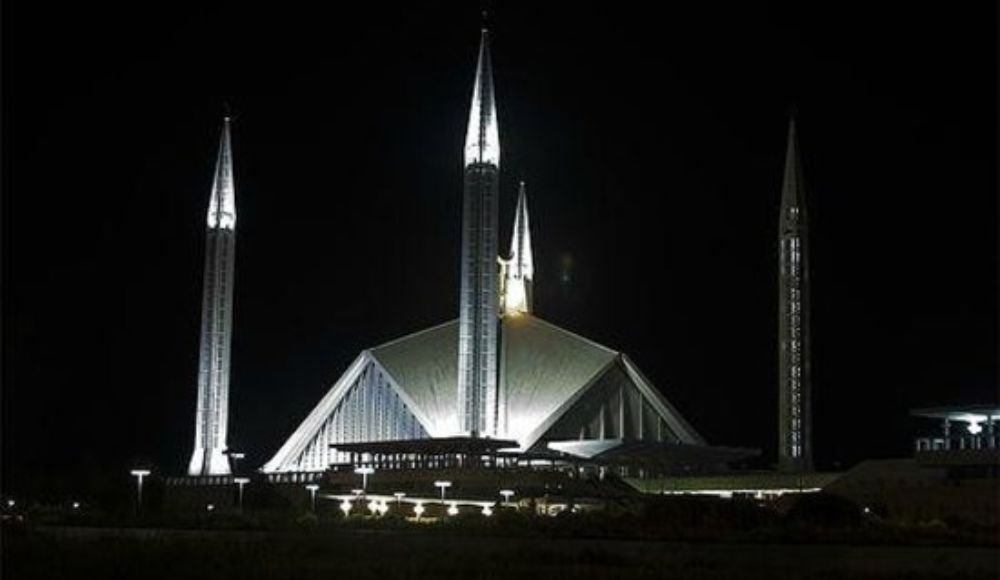
Built in 1986, Faisal Mosque serves as both a worship space and a representation of Pakistan’s modern Islamic character. The mosque bears the name of Saudi Arabia’s King Faisal bin Abdulaziz, who provided funding for its construction. Currently holding the position as the world’s sixth-largest mosque, it maintains its status as the biggest in South Asia.
The structure’s distinctive tent-inspired design, complemented by four soaring minarets, has made it one of Pakistan’s most frequently photographed sites. Its location beneath the Margalla Hills enhances its visual impact, creating a memorable backdrop that combines natural beauty with human craftsmanship.
Visitors come from across the globe to experience this architectural achievement, which has become synonymous with Islamabad itself. The mosque’s design breaks from traditional dome-based mosque architecture, offering a fresh interpretation of Islamic building principles while maintaining reverence for the faith it represents.
History of Faisal Mosque

King Faisal of Saudi Arabia visited Pakistan in 1969. While he was there, he told Pakistani leaders he wanted to build a national mosque for the country. They said yes right away. Saudi Arabia paid for everything—around 120 million Saudi Riyals, about $130 million today.
In 1976, Pakistan announced a competition for architects around the world. Vedat Dalokay from Turkey sent in his drawings and won. His design was different from regular mosques, which is why it caught everyone’s attention. Construction started in 1976 and finished in 1986.
The mosque is named after King Faisal. He was killed in 1975, before workers finished building it.
Key Historical Points:
- Saudi Arabia paid for the mosque and gave it to Pakistan
- Vedat Dalokay from Turkey designed it
- It took ten years to build, from 1976 to 1986
- General Zia-ul-Haq was president when the mosque opened
Architectural Style and Design
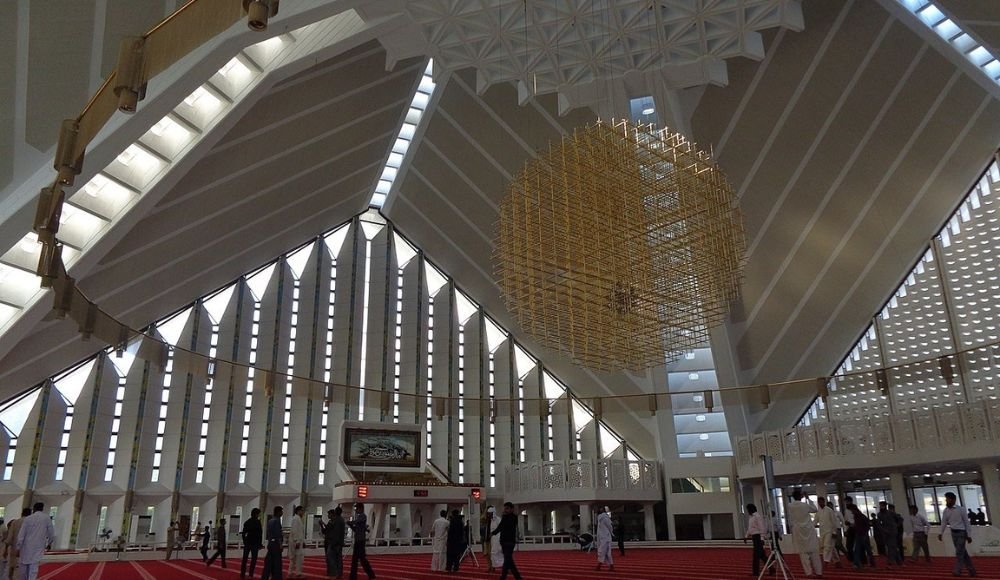
Unlike traditional mosques with domes, Faisal Mosque features a contemporary Bedouin tent-inspired design with eight sloping concrete shells forming a gigantic triangular prayer hall. The four minarets, each 79 meters (259 ft) tall, resemble the corners of a traditional Arab tent.
The mosque combines modern architecture with Islamic geometry. Its massive prayer hall can accommodate up to 100,000 worshippers in the main hall and courtyard combined , making it one of the largest mosques globally.
Key Architectural Highlights:
- No domes , unique tent-like roof
- 79-meter-high minarets
- Turkish-style triangular prayer hall
- Intricate Turkish and Pakistani marble work inside
Location & Importance in Islamabad
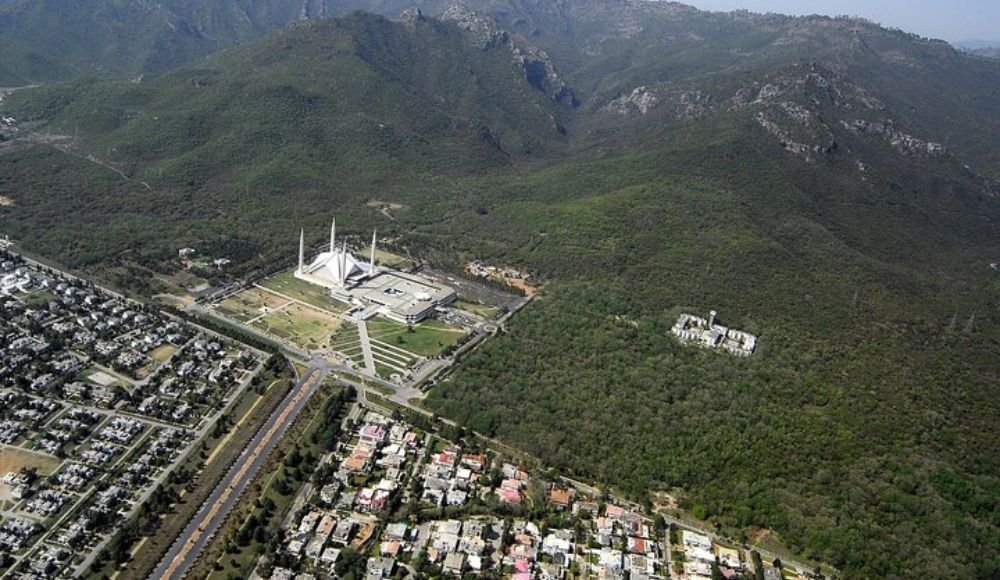
The Faisal Masjid location is at the northern end of Shah Faisal Avenue, at the foothills of the Margalla Hills , offering panoramic views of Islamabad. This strategic placement makes it the most prominent Islamabad mosque and a defining feature of the capital’s skyline.
Its location symbolizes the fusion of nature and architecture, making Faisal Mosque in Islamabad a central point for both religious and tourist activities.
Also Read: Discover Pakistan: 19 Interesting Facts That Will Surprise You
Things to Do at Faisal Mosque
- Admire the stunning architecture and take photos from the courtyard
- Explore the interior prayer hall (non-Muslims allowed outside prayer times)
- Visit the Islamic International University campus nearby
- Enjoy the beautiful gardens and reflecting pools
- Watch the sunset behind the Margalla Hills , a photographer’s favorite
Best Time to Visit Faisal Mosque
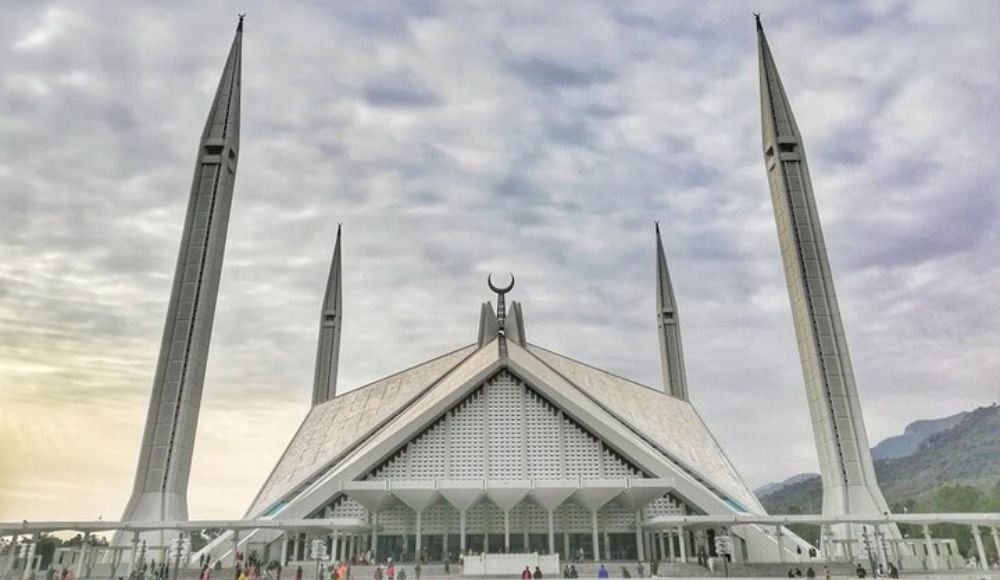
The best time to visit Faisal Mosque is:
- Early morning (just after Fajr prayer) for peace and soft light
- Late afternoon (before Maghrib) for golden hour photography
- Ramadan nights , the mosque is beautifully illuminated
- Spring (March–April) and Autumn (October–November) for pleasant weather
Avoid midday in summer (May–August) due to extreme heat.
Visitor Guidelines & Dress Code
- Dress modestly: Cover shoulders and knees (scarves and abayas available at entrance)
- Remove shoes before entering the prayer hall
- Women must cover their heads
- No entry during the five daily prayer times for non-Muslims
- Maintain silence and respect the sanctity of the place
Nearby Attractions in Islamabad
Pakistan Monument
Just 10 minutes away , a national symbol shaped like a blooming flower.
Lake View Park
A scenic family park along Rawal Lake with walking tracks and food courts.
Shah Faisal Avenue
The grand boulevard leading to the mosque , perfect for evening drives.
Saidpur Village
A restored 500-year-old Mughal-era village with restaurants and cultural vibes.
Margalla Trails
Hiking trails starting right behind the mosque , Trail 3 and Trail 5 are popular.
Tips for Tourists Visiting the Mosque
- Hire a local guide or use ride-hailing apps (Careem/Uber) , public transport is limited
- Carry water and sunscreen in summer
- Visit on weekdays to avoid crowds
- Combine your visit with Pakistan Monument and Daman-e-Koh for a full-day itinerary
- Photography is allowed in the courtyard and exterior , but avoid taking pictures of worshippers
Why Faisal Mosque is a Must-Visit Landmark in Islamabad
Faisal Mosque Pakistan represents modern Islamic architecture at its finest. It’s not just a mosque, it’s a cultural icon, a photography hotspot, and a peaceful retreat in the heart of the capital. Whether you’re a history enthusiast, architecture lover, or spiritual traveler, Faisal Masjid Islamabad should be at the top of your Pakistan itinerary.
FAQ
A: Faisal Mosque is famous for its unique modern design, massive capacity (up to 300,000 including courtyard), and its status as Pakistan’s national mosque and one of the largest in the world.
A: It was designed by Turkish architect Vedat Dalokay, who won an international competition in 1976.
A: Photography is allowed in the courtyard and exterior areas. Inside the prayer hall, it’s generally discouraged , especially during prayers , and may require permission.
A: Early morning or late afternoon. Avoid prayer times and extreme summer heat.
A: The main prayer hall holds about 100,000 worshippers, while the courtyard and grounds can accommodate up to 300,000 during major events like Eid.
Plan your visit to Faisal Masjid Pakistan today and experience one of the most beautiful and unique mosques in the world!
Eventica Travels – Your trusted partner for exploring Pakistan’s hidden gems and iconic landmarks.